This blog explains how a CMMC maintenance policy helps organizations protect sensitive systems during repairs and upkeep. It walks through how to control vendors, manage tools, supervise maintenance, and align policies with security plans to reduce risk.
Key Takeaways
✅ Vet and supervise all maintenance vendors to prevent unauthorized access
✅ Build structured policies that connect directly to your system security plan for audit readiness
Who Should Read This?
This guide is ideal for IT leaders, compliance teams, and government contractors trying to secure system maintenance processes. It’s especially useful if you’re struggling with vendor access, remote maintenance risks, or meeting CMMC requirements.
Maintenance Domain
The maintenance (MA) domain focuses on the physical and digital upkeep of your systems. Much like a car needs oil changes, your system needs regular care to prevent failures. This domain ensures that only authorized people perform repairs. It ensures that they follow strict rules to protect your sensitive data while they work. The maintenance family requires you to track who touches your equipment and what they do to it. It prevents "secret" changes that could weaken your defenses. Maintenance controls, you focus on authorized repairs, tools and equipment, and remote maintenance. This domain places a heavy focus on maintenance supervision. You should not leave an outside technician alone with sensitive hardware. Supervising work ensures the technician only accesses the system(s) they need to fix.
Policy Writing
Domain level policies address the controls implemented within systems and organizations. Policies are the perfect home to define control parameters, such as frequencies. Procedures describe the implementation of policies or controls. Organizations may document procedures within the system security plan or within separate documents. Here are some of the principles that guided this maintenance policy:
Restating controls does not constitute an organizational policy or procedure.
Policies should omit references to specific technologies.
Address procedures to the individual or role performing the task.
Use plain language when writing procedures and avoid technical jargon.
Policy Structure
A cover page tracks specific details regarding the policy, including:
Version - number capturing major and minor policy revisions
Effective Date - date of policy dissemination
Last Review Date - date the policy was last reviewed
Next Scheduled Review Date - the date for the next mandatory policy evaluation
Classification - internal categorization of the policy’s sensitivity for confidentiality
NIST SP 800-53 defines specific objectives for domain-level policies. From this guidance we incorporate the following major sections into our policy:
The purpose statement should identify why the policy exists and what it aims to achieve.
The scope should identify who it applies to and under what circumstances.
The policy governance section covers most of the organization defined parameters. These subsections cover the following details:
Policy Dissemination List - defines roles or personnel to disseminate the policy
Procedure Dissemination List - defines roles or personnel to disseminate the procedures
Policy Owner - defines an official to management the policy and supporting procedures
Policy Review Frequency - how often the organization reviews and updates the policy
Policy Review Triggers - events that require an out-of-cycle policy review or update
Procedure Review Frequency - how often the organization reviews and updates the procedures
Procedure Review Triggers - events that require an out-of-cycle procedure review or update
The fourth section includes our policy statements. Subsection headings group related Policy statements together. Each policy statement has a unique number for traceability to other documents. A policy statement number consists of the section, subsection, and policy statement order.
The fifth section identifies the relevant roles and responsibilities identified in the policy. A single, short paragraph describes the responsibilities for each role. The sixth section identifies the supporting procedures. We opted to align our subsection headings with the names of supporting procedures. The seventh section identifies related documents, to include relevant policies. The eighth section documents a revision history. This table captures policy changes, including: version, effective date, approver(s), change summaries. The ninth section captures a formal authorization of the policy by the policy owner.
Policy Statements
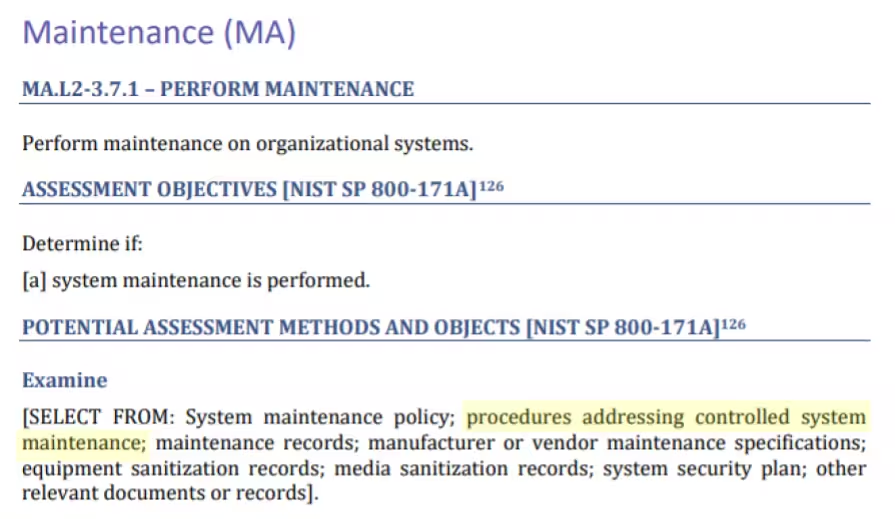
NIST identified a named set of procedures for each practice within NIST SP 800-171. The assessment guide (SP 800-171A) contains the original mappings. The CMMC assessment guides include this mapping as well. The potential assessment methods and objects section contains a subsection called examine. Within each practice, NIST identified relevant policies, procedures and other artifacts. We used the relevant procedures to organize the section headings within each policy.
The organization must vet all support vendors before hiring them for services. Vendors must prove they screen their staff and follow strict government security rules. If a vendor will have access to sensitive data, they must meet high security standards. Staff wipe hardware of all sensitive information before it leaves the organization's control. The team must use government-approved methods to ensure the data is unrecoverable. Staff destroy storage components of broken devices by shredding or crushing.
CMMC Objectives Covered in This Section:
(2) objectives from AC.L2-3.1.20
(1) objective from MA.L2-3.7.2
(1) objective from MA.L2-3.7.3
(2) objectives from MP.L2-3.8.3
(1) objective from PS.L2-3.9.1
System Maintenance Tools and Media
Staff track every tool used for maintenance through official service and change requests. These tools must stay updated and patched like any other company system. Staff inspect third-party provided tools for viruses and verify its digital fingerprint (hash). When downloading software, technicians must scan the files for malicious code before installation. Staff may only download installation files from reputable vendor websites or official resellers.
CMMC Objectives Covered in This Section:
(2) objectives from MA.L2-3.7.2
(1) objective from MA.L2-3.7.4
(2) objectives from SC.L2-3.13.2
Maintenance Personnel
The organization assigns a specific leader to oversee all repair and upkeep activities. This ensures that every fix follows the company’s security rules. Only staff members who already have special "privileged" access can perform maintenance. Internal staff supervise outside technicians at all times. This "shadow" ensures the guest only accesses what is necessary for the job. When possible, internal staff should perform the technical steps using the vendor's instructions.
CMMC Objectives Covered in This Section:
(1) objective from MA.L2-3.7.1
(1) objective from MA.L2-3.7.2
(1) objective from MA.L2-3.7.6
Nonlocal System Maintenance
The organization places tight controls on remote repairs. The CISO must approve any remote maintenance connection before it starts. All remote maintenance sessions use multi-factor authentication. For direct connections, staff must use unique credentials and security keys when possible. Internal Staff must observe all remote maintenance sessions. Staff must disable connections immediately upon completion of remote maintenance. Permanent diagnostic links must stay off unless an authorized maintenance window is open.
CMMC Objectives Covered in This Section:
(1) objective from AC.L2-3.1.20
(3) objectives from IA.L2-3.5.3
(2) objectives from MA.L2-3.7.5
Syncing Policies with System Security Plan
FedRAMP guidance on how to write a control implementation statement states the following:
Implementation statements should reference supporting policies and procedures.
If a document is long, point to the exact sections that matter instead of the whole thing.
Write summaries so that reviewers don't have to go look up other documents.
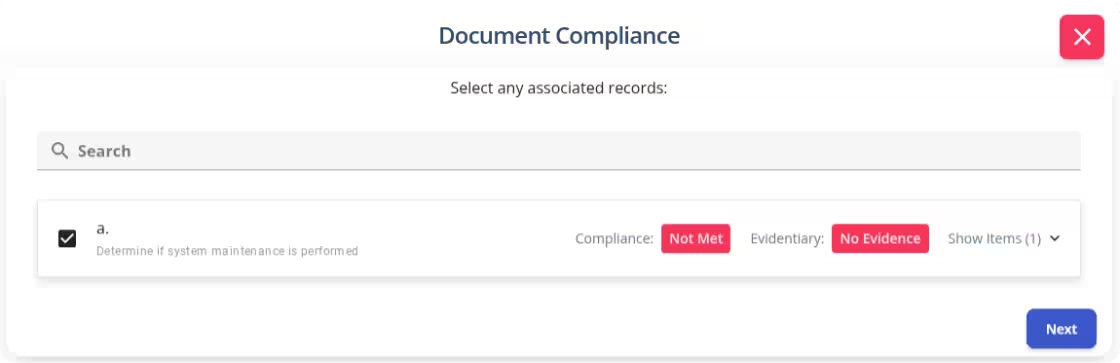
Write your policies before you start drafting your security plan. K2 GRC shows you exactly how each part of your policy connects to your security goals. This starts with selecting an objective to document.
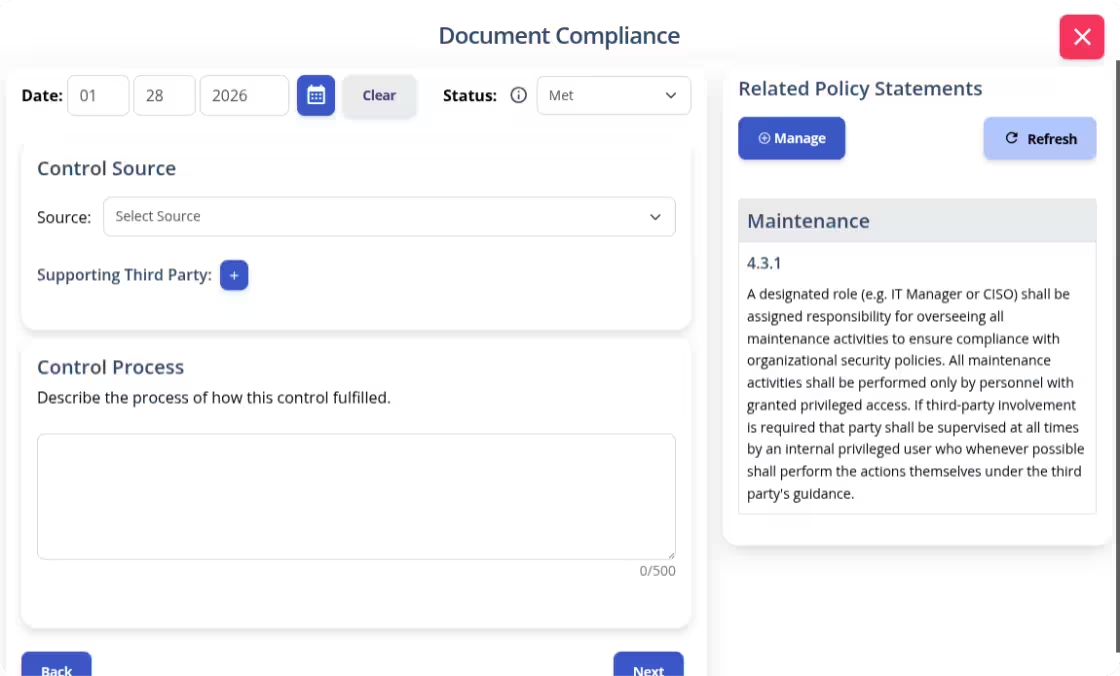
After selecting a criteria, K2 GRC shows policy statements relevant to that criteria. The input screen shows the specific policy name and the statement’s number. This enables users to cite relevant policy sections within the control narratives. The system aggregates these control narratives to populate the system security plan (SSP).
Trusting outsiders with your systems is stressful for business and IT leaders. You’ve worked too hard to build your business to let a simple repair session turn into a security nightmare. Without a clear plan, you are leaving your most sensitive data to chance. A strong Maintenance policy takes the guesswork out of the equation. It replaces that nagging worry with the confidence that comes from total oversight. When you have a formal process in place, you are no longer hoping for the best. You ensure it by vetting and supervising vendors.
It turns a risky necessity into a routine, secure operation. Don't wait for a maintenance mishap to realize your policy is missing. Download our Maintenance Policy template today to get the professional foundation you need. Give your team guidance to handle repairs with precision and regulatory conformance.
❓ Frequently Asked Questions About CMMC Maintenance Policy
What is a CMMC maintenance policy?
A CMMC maintenance policy is a formal document that explains how an organization controls system repairs, upkeep, and maintenance access. It helps ensure only authorized people, tools, and processes are used when working on systems that handle sensitive data.
Why is a CMMC maintenance policy important?
A CMMC maintenance policy reduces the risk of unauthorized access during repairs or service work. It gives your team clear rules for supervising vendors, managing tools, and protecting sensitive information during maintenance activities.
Who should be allowed to perform system maintenance under CMMC?
Only authorized personnel should perform system maintenance under CMMC requirements. Outside technicians should be supervised, and internal staff should handle the work directly when possible to limit unnecessary access.
How should remote maintenance be controlled for CMMC compliance?
Remote maintenance should require approval before the session begins and should use strong access controls like multi-factor authentication. A strong CMMC maintenance policy also requires staff to monitor remote sessions and disable connections as soon as the work is complete.
What should a maintenance policy say about tools and software?
The policy should explain how maintenance tools are tracked, updated, and checked before use. It should also require malware scans, trusted download sources, and documentation through service or change requests.
How does a CMMC maintenance policy support the system security plan?
A CMMC maintenance policy supports the system security plan by giving you clear policy statements to reference in your control narratives. This makes it easier to show how your maintenance practices align with security objectives during reviews and assessments.
What should be included in a CMMC maintenance policy template?
A good template should include the policy purpose, scope, review schedule, roles and responsibilities, policy statements, supporting procedures, and revision history. It should also address vendor oversight, maintenance personnel, remote maintenance, and approved tools.
Learn how a CMMC System and Communications Protection Policy helps secure network boundaries, encrypt sensitive data, and protect Controlled Unclassified Information (CUI) to support CMMC Level 2 compliance.
This blog explores why the Security Assessment domain acts as the “report card” for an organization’s cybersecurity program by validating whether security controls actually work in practice.
This blog explores the growing importance of AI risk management and how organizations can reduce security, compliance, and operational risks associated with artificial intelligence.