This blog explains how a CMMC System and Services Acquisition Policy helps organizations build security into purchasing, vendor management, and system development. It walks through what the SA domain covers, why it matters, and how clear policies support stronger CMMC Level 2 compliance.
Key Takeaways
✅ Security should be considered before buying, building, or adding new systems.
✅ A CMMC System and Services Acquisition Policy helps define expectations for vendors, developers, budgets, and external services.
✅ Strong acquisition policies reduce risk by making sure new tools and services support security instead of weakening it.
Who Should Read This?
This guide is ideal for organizations preparing for CMMC Level 2 or improving how they manage technology purchases and outside service providers. It’s especially useful if you need a clearer way to connect procurement, vendor oversight, and system development to your security requirements.
System and Services Acquisition Domain
The System and Services Acquisition (SA) domain is the blueprint for security programs. This domain requires you to plan for security before you even buy or build it. NIST SP 800-171 Rev 2 assumes nonfederal organizations already meet these controls. A single control from the SA domain wound up in the SC domain. Revision 3 of NIST SP 800-171 makes the assumed controls explicit requirements.
For this reason, we opted to include a policy for this domain. SA controls focus on resource allocation, system development, and external services. This domain builds proactive security by choosing secure vendors. The SA domain is about "buying and building" with your eyes wide open. Every new tool or service you add to your business makes your security stronger, not weaker.
Policy Writing
Domain level policies address the controls implemented within systems and organizations. Policies are the perfect home to define control parameters, such as frequencies. Procedures describe the implementation of policies or controls. Organizations may document procedures within the system security plan or within separate documents.
Here are some of the principles that guided this system and services acquisition policy:
Restating controls does not constitute an organizational policy or procedure.
Policies should omit references to specific technologies.
Address procedures to the individual or role performing the task.
Use plain language when writing procedures and avoid technical jargon.
Policy Structure
A cover page tracks specific details regarding the policy, including:
Version - number capturing major and minor policy revisions
Effective Date - date of policy dissemination
Last Review Date - date the policy was last reviewed
Next Scheduled Review Date - the date for the next mandatory policy evaluation
Classification - internal categorization of the policy’s sensitivity for confidentiality
NIST SP 800-53 defines specific objectives for domain-level policies. From this guidance we incorporate the following major sections into our policy:
The purpose statement should identify why the policy exists and what it aims to achieve.
The scope should identify who it applies to and under what circumstances.
The policy governance section covers most of the organization defined parameters. These subsections cover the following details:
Policy Dissemination List - defines roles or personnel to disseminate the policy
Procedure Dissemination List - defines roles or personnel to disseminate the procedures
Policy Owner - defines an official to management the policy and supporting procedures
Policy Review Frequency - how often the organization reviews and updates the policy
Policy Review Triggers - events that require an out-of-cycle policy review or update
Procedure Review Frequency - how often the organization reviews and updates the procedures
Procedure Review Triggers - events that require an out-of-cycle procedure review or update
The fourth section includes our policy statements. Subsection headings group related Policy statements together. Each policy statement has a unique number for traceability to other documents. A policy statement number consists of the section, subsection, and policy statement order.
The fifth section identifies the relevant roles and responsibilities identified in the policy. A single, short paragraph describes the responsibilities for each role. The sixth section identifies the supporting procedures. We opted to align our subsection headings with the names of supporting procedures. The seventh section identifies related documents, to include relevant policies. The eighth section documents a revision history. This table captures policy changes, including: version, effective date, approver(s), change summaries. The ninth section captures a formal authorization of the policy by the policy owner.
Policy Statements
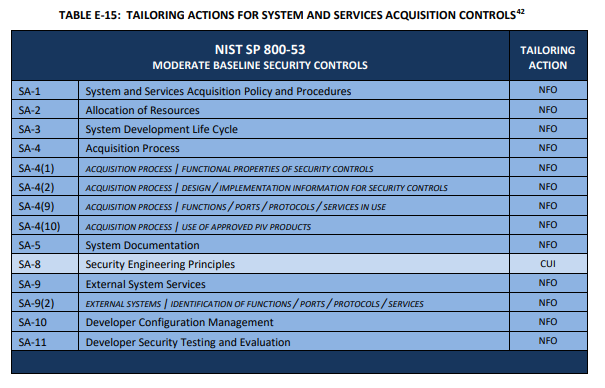
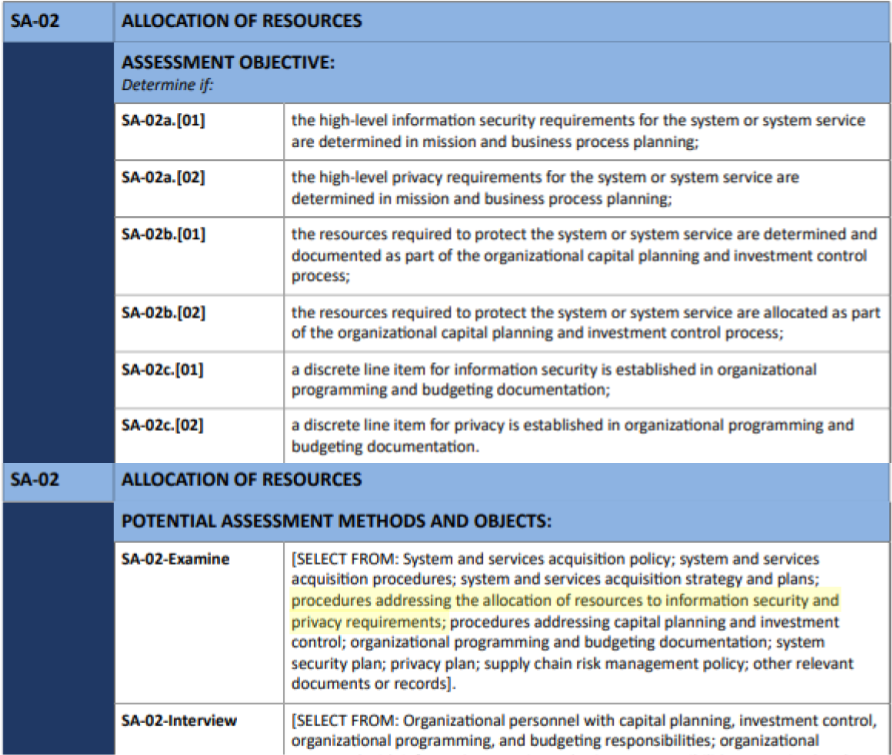
NIST identified a named set of procedures for each practice within NIST SP 800-171. The assessment guide (SP 800-171A) contains the original mappings. The CMMC assessment guides include this mapping as well. NIST derived these assessment objects from SP 800-53A. Table E maps the tailoring actions of controls from SP 800-53. For this domain, we followed the original procedures defined for the underlying controls.
Allocation of Resources to Information Security and Privacy Requirements
Before purchasing or building a new system, an assessment identifies the needed protections. The organization budgets the necessary people, money, and technology to install these protections. The CFO maintains a specific line item in the budget for security and privacy. This ensures money needed for updates, maintenance, and compliance is always available.
No CMMC Objectives Covered in This Section
Integration of Security Requirements into the Acquisition Process
The organization uses a System Development Life Cycle (SDLC) for new technology. This process incorporates security into every step. The organization assigns people to key roles, with each briefed on their duties. At major milestones, the team performs a "health check" to see how new threats might affect the project. The organization also uses strict, standardized language in all vendor contracts. These include requirements for specific capabilities and proof of their implementation.
The organization requires developers to map how the system works. This includes diagrams of how sensitive data moves and a list of every digital door or port the system uses. The organization disables any feature or connection not on the approved list. This "deny-by-default" approach ensures the system only performs its intended tasks. Before finishing a project, dedicated personnel perform a final review. This step verifies and tests security rules in the contract. This ensures the organization does not take ownership of a system that could put it at risk.
No CMMC Objectives Covered in This Section
System Documentation
The organization must get or create security manuals for every system. These documents must explain how to install, configure, and maintain security features. They also outline the security responsibilities for both administrators and regular users. If a vendor does not provide these guides, dedicated personnel must write them. The team distributes these manuals to personnel with security responsibilities for the system.
No CMMC Objectives Covered in This Section
Security Engineering Principles
The organization uses a Security and Privacy Architecture to defend its data. This includes detailed maps and designs that show a "defense-in-depth" approach. The team follows a "less is more" rule by only collecting the data they need. They isolate sensitive parts of the system from the rest of the network to limit risk. The organization updates security plans whenever the system architecture changes. The team follows government-standard principles to build and buy software or cloud services.
CMMC Objectives Covered in This Section:
(6) objectives from SC.L2-3.13.2
Monitoring Control Compliance by External Service Providers of System Services
The organization holds all outside partners to the same security standards used in-house. Any company handling CUI must prove they meet CMMC Level 2 requirements. Cloud services storing CUI must provide a FedRAMP Moderate or equivalent authorization. To keep roles clear, the organization uses a "Shared Responsibility Matrix." This document shows which security tasks the provider and organization manage. Dedicated personnel ensure these partners stay compliant every year. This includes reviewing audit reports and checking for any new security warnings.
CMMC Objectives Covered in This Section:
(2) objectives from AC.L2-3.1.20
(1) objective from AC.L2-3.1.3
External System Services
Outside services must provide a list of all digital doors and connections. The provider must document every port and protocol needed. Dedicated personnel review this list to ensure the system enables only required connections.
No CMMC Objectives Covered in This Section
System Developer Configuration Management
Developers must follow a change control process during every phase of a system's life. Developers must track and protect changes made to source code or security settings. Developers must provide digital signatures or hashes for every file they deliver.
Dedicated personnel check digital signatures before allowing new updates on the network. The change control board must review how changes might affect the system's security. Developers must keep a formal log of any software bugs or security flaws they find. They report these findings to the organization every month. They report critical flaws immediately.
No CMMC Objectives Covered in This Section
System Developer Security and Privacy Testing
Developers follow a plan to test that security guard and privacy lock works as intended. Developers must test the code every time they make a major update or at least once every three months. They use tools to scan for weaknesses and review the most important parts of the software. This deep dive ensures that the security features are solid before the software is ever used.
Developers must document evidence showing which tests passed. If they find any bugs, they must track them in a central system and fix them based on a risk categorization. Developers must verify fixes actually worked and didn't break something else.
No CMMC Objectives Covered in This Section
Syncing Policies with System Security Plan
FedRAMP guidance on how to write a control implementation statement states the following:
Implementation statements should reference supporting policies and procedures.
If a document is long, point to the exact sections that matter instead of the whole thing.
Write summaries so that reviewers don't have to go look up other documents.
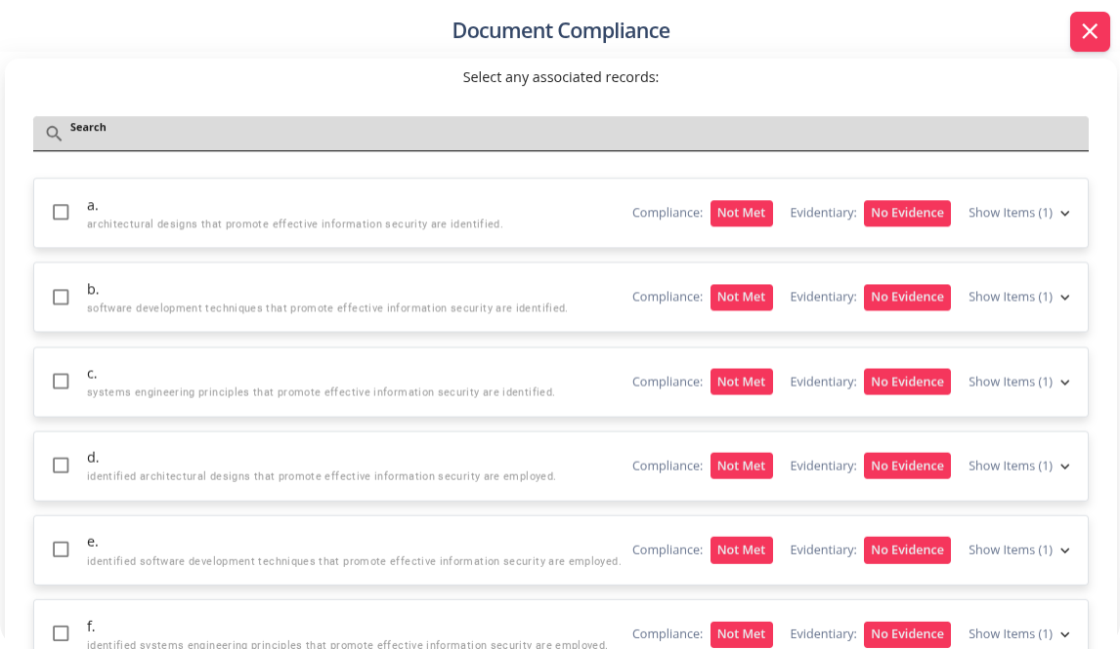
Write your policies before you start drafting your security plan. K2 GRC shows you exactly how each part of your policy connects to your security goals. This starts with selecting an objective to document.
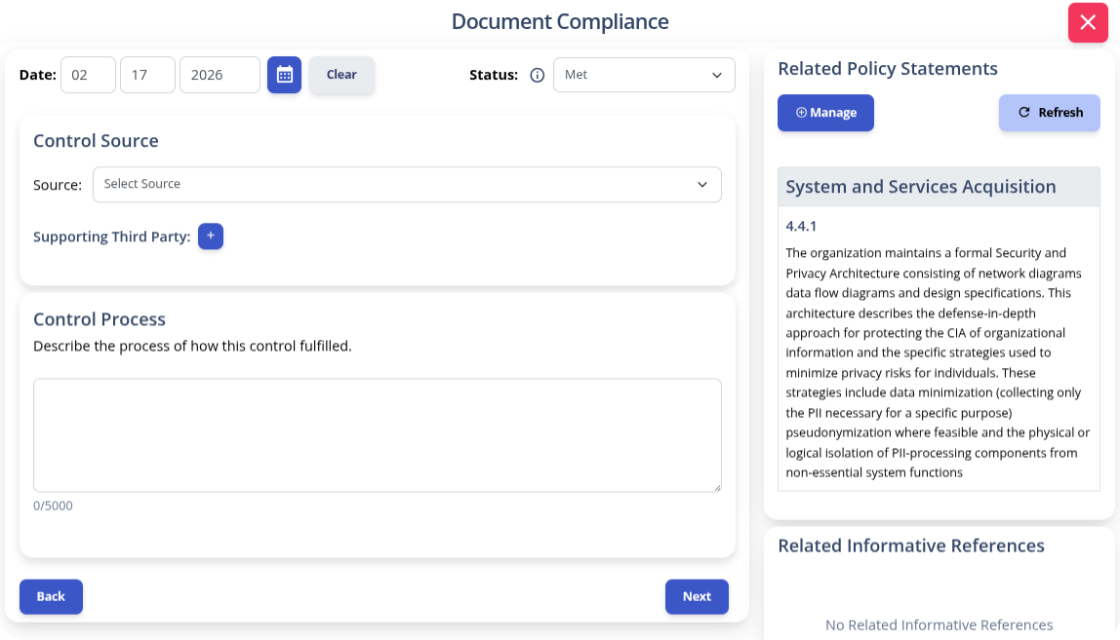
After selecting a criteria, K2 GRC shows policy statements relevant to that criteria. The input screen shows the specific policy name and the statement’s number. This enables users to cite relevant policy sections within the control narratives. The system aggregates these control narratives to populate the system security plan (SSP).
The System and Services Acquisition domain is your secret weapon for stress-free growth. By addressing security requirements early, you lead with a proactive defense. This includes making your budget, vendors, and developers care about security. When you build security from the start, compliance becomes a natural result of your work. Don't let a bad procurement decision today become a failed audit tomorrow. Our SA Policy template incorporates security into vendors, budgets, and product development. It turns "buying technology" from a risk into a strategic advantage. Download the policy template now and grow your business without sacrificing security.
❓ Frequently Asked Questions About CMMC System and Services Acquisition Policy
What is a CMMC System and Services Acquisition Policy?
A CMMC System and Services Acquisition Policy explains how an organization includes security requirements when buying, building, or using systems and services. It helps define expectations for vendors, developers, budgets, documentation, and external service providers.
Why is system and services acquisition important for CMMC compliance?
System and services acquisition is important because new tools, vendors, and services can create security risks if they are not reviewed properly. A clear CMMC System and Services Acquisition Policy helps organizations consider security before making technology decisions.
What should be included in a system and services acquisition policy?
A system and services acquisition policy should cover security planning, vendor requirements, system documentation, external services, developer responsibilities, and review procedures. It should also define who owns the policy and how often it is reviewed.
How does a CMMC System and Services Acquisition Policy help with vendor management?
A CMMC System and Services Acquisition Policy helps organizations set clear security expectations for outside providers. This can include contract requirements, shared responsibility matrices, compliance reviews, and proof that vendors can protect CUI.
How does the SA domain connect to NIST SP 800-171?
The System and Services Acquisition domain connects to NIST SP 800-171 by helping organizations address security requirements tied to procurement, system development, and external services. These requirements support stronger protection for controlled unclassified information.
Who needs a CMMC System and Services Acquisition Policy?
Organizations preparing for CMMC Level 2 may need a CMMC System and Services Acquisition Policy if they buy systems, work with developers, or use outside providers that support sensitive operations. It is especially useful for teams that want to reduce procurement risk and make security part of every technology decision.
Learn how to build an AI risk management policy that addresses governance, risk appetite, AI security risks, regulatory requirements, and ongoing monitoring.
A risk register helps organizations identify, assess, and manage potential risks in one centralized place. Learn the key components of a risk register, how to create and maintain one, and how it supports a more proactive approach to risk management.
Risk management in healthcare helps organizations identify, assess, and reduce risks that can impact patient safety, compliance, operations, and finances. Learn practical strategies for building a proactive risk management program and prioritizing the risks that matter most.