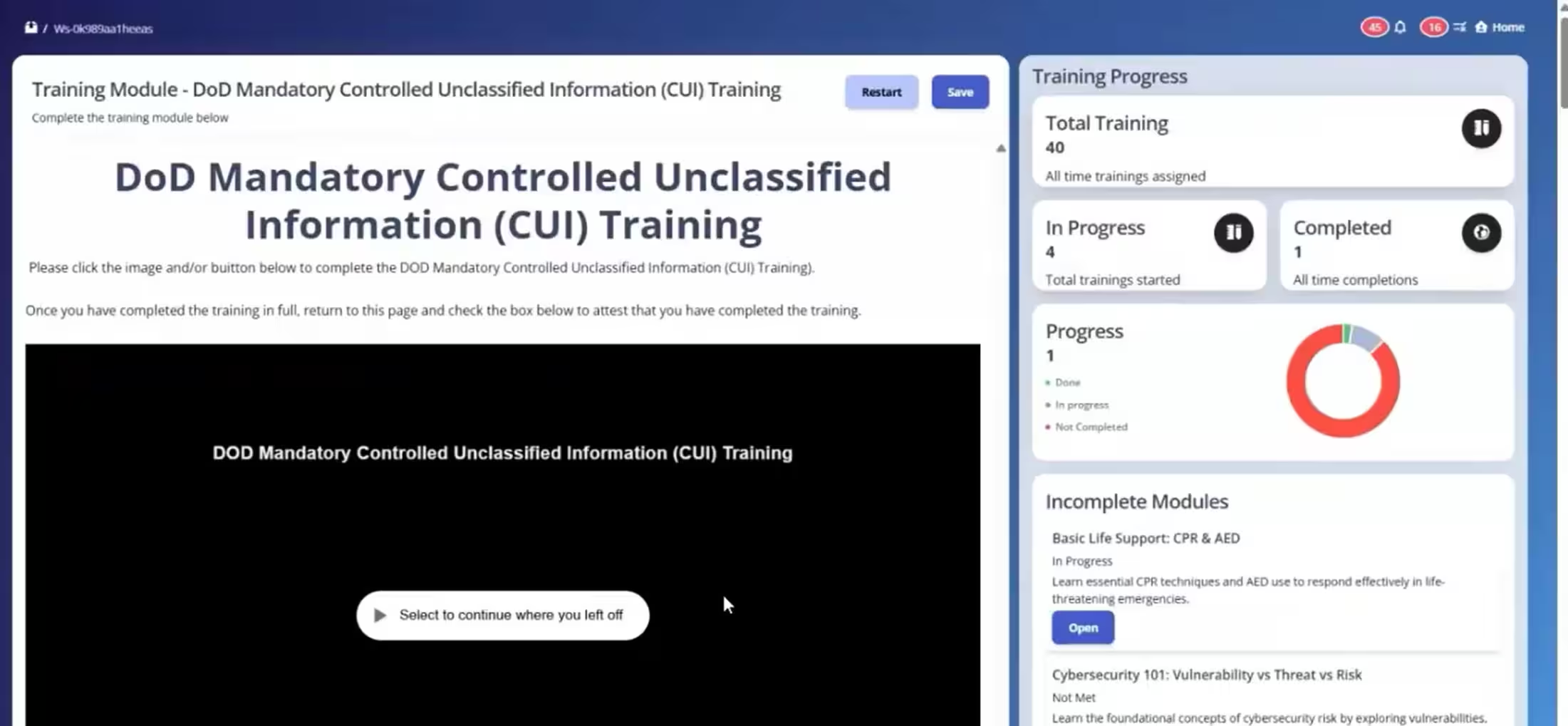
This blog explains how DoD mandatory CUI training helps organizations protect Controlled Unclassified Information (CUI) and meet federal contract requirements. It covers what CUI is, who must complete training, what the training includes, and how organizations can manage training and compliance more efficiently.
Key Takeaways
✅ DoD mandatory CUI training is required for personnel who create, access, or handle Controlled Unclassified Information.
✅ Training teaches users how to identify, mark, protect, and report issues involving CUI.
✅ Automating training tracking helps organizations stay compliant and reduces administrative workload.
Who Should Read This?
This guide is ideal for government contractors, defense industry organizations, IT teams, compliance leaders, and administrators responsible for managing CUI training requirements. It’s especially useful for teams struggling with tracking training completion, maintaining documentation, and preparing for audits.
Regular security training reduces risk from 60% to 10%. No matter what company you work for, to keep data safe there are certain protocols. These may differ depending on the industry you work in. For instance, in healthcare it is essential that anyone who handles protected health information (PHI) adheres to HIPAA regulations.
Today, we will be focusing on organizations who work with the Department of Defense (DoD). These organizations must follow strict rules when handling sensitive information. As that information often includes military information and other critical infrastructure. This information all falls under the umbrella of Controlled Unclassified Information (CUI).
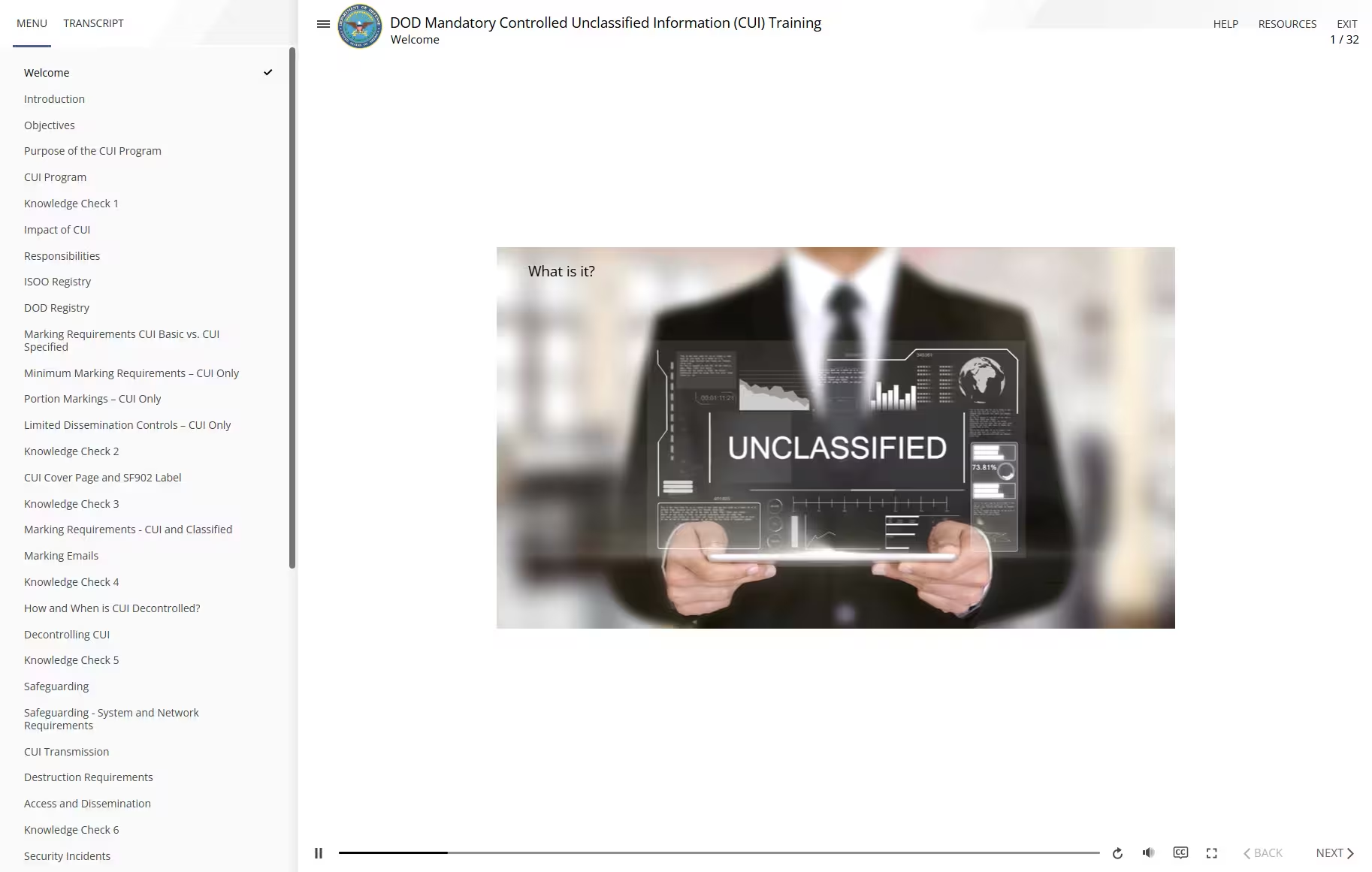
Those that work with CUI must complete security training. Mandatory CUI training is one of the most important steps when it comes to working with sensitive information.
If your organization stores, shares, or works with controlled unclassified information, understanding training rules is not optional. It is a contract and federal requirement. This affects both government teams and private contractor organizations, too.
Our guide explains what CUI is, how to identify it, and who must do training. Let's get started!
What is CUI and Why Does the DoD Require Mandatory Training?
I already went over what CUI is in a general way, but there's way more to it. CUI is information the United States Government creates or possesses. It does not meet the criteria for classified information, but still needs protection. It requires safeguarding or distribution controls limiting who can view it. Protectors of this information cannot release it to the public without further review.
The DoD oversees this security program. They made the DoD CUI Program to standardize how to handle this information across government and industry partners. CUI policy provides a uniform marking system that spreads across the Federal Government.
CUI markings alert recipients of required special handling of information to comply with law, regulation, or government-wide policy.
Training exists because sensitive information moves between different people. These might be agencies, suppliers, or contractors. Without proper instruction, the risk of exposure of CUI data rises.
Under federal rules, DoD personnel with access to unclassified information must finish approved CUI training.
Keep procedures consistent across federal systems.
Who Must Complete DoD Mandatory CUI Training?
In accordance with DoD standards, anyone that handles CUI must complete annual training. To date, about 2.3 million military, civilian and contractor personnel have completed this training. The training applies to many people across the defense network. Including DoD personnel, federal employees, and more. Those who create or manage a document with CUI on it are responsible for keeping up with it.
Organizations working under a federal contract must finish the CUI training before accessing sensitive information. These rules are often required by government contracting activities.
Skipping it can slow onboarding. It can also block contract approval altogether. Even deny access to government contracting activities for contracts.
What Does CUI Basic Training Cover?
CUI basic instruction gives the core knowledge needed to handle sensitive information safely. Whether you need guidance on storing, sharing or reporting incidents, training covers all these topics.
Your training program should include the following:
These topics give users the minimum knowledge needed before getting access. Most programs also include an exam or study session. Some use tools like Quizlet to include flashcards containing key terms.
Anyway, passing the test gives a certificate or other proof of certification. These pretty much say that you know how to keep information out of the wrong hands.
How Do You Identify CUI Within a Document?
When looking at a document, how do you know exactly what CUI is?
It can definitely be tricky.
After all, not all sensitive info is obvious. Identify CUI when the information includes export-controlled or operational data. Also, if you share that information under contracts with CUI requirements.
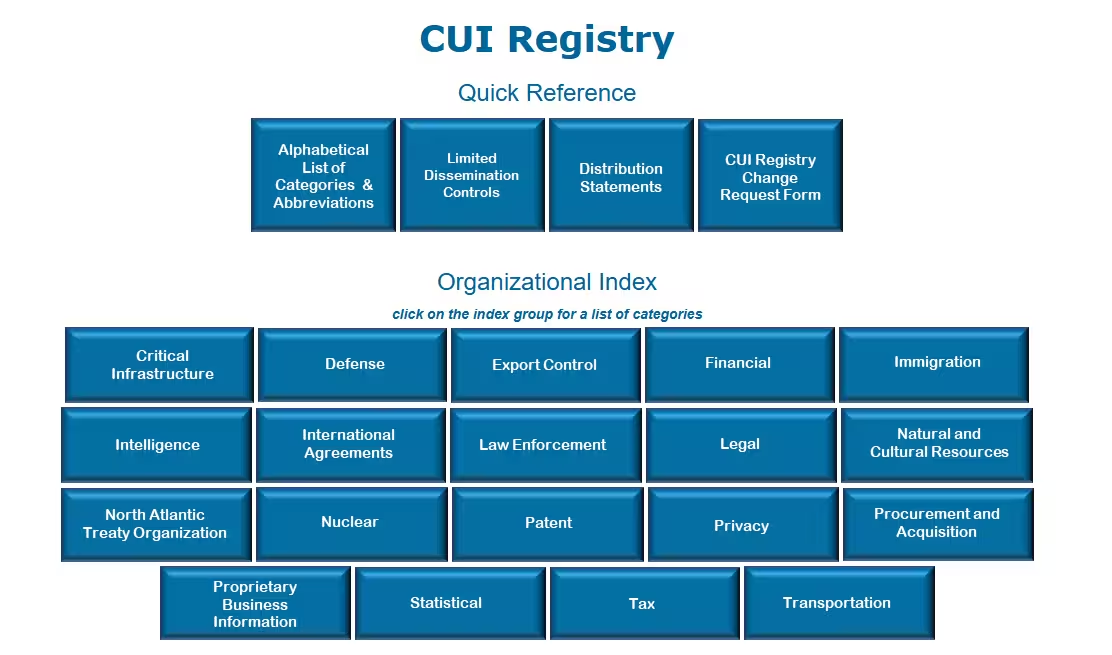
You can also check the information against the DoD CUI Registry. These documents should have the acronym "CUI" on them. Often in a banner on the top and bottom of the page.
The DoD program provides guidance to help decide before sharing info outside your organization.
What Are the Marking Requirements for CUI?
Making sure you are correctly marking these documents is a core rule. They help users quickly recognize sensitive information and understand how to handle it.
These required markings include:
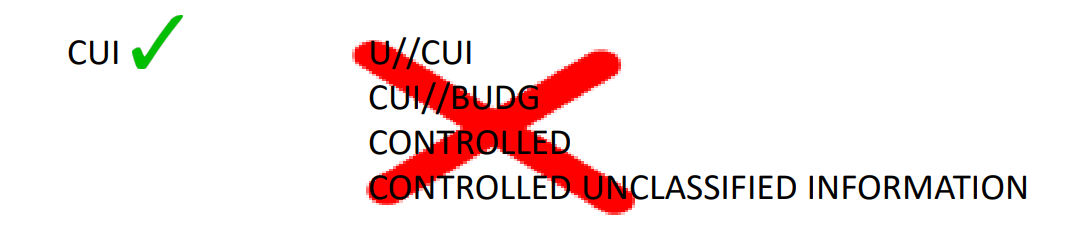
The acronym “CUI” at the top and bottom of every page.
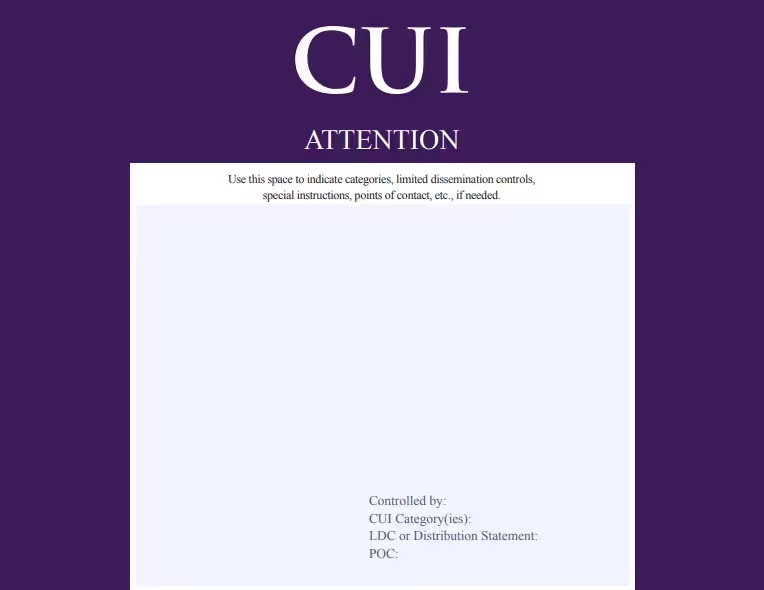
A CUI designation indicator block on the first page or cover.
The office or organization that created the document.
The CUI category.
Any dissemination or distribution limits.
A point of contact for questions.
Note that you should not add “UNCLASSIFIED” before CUI. The category should appear only inside the designation indicator block, not in page headers or footers.
Portion markings are optional but recommended. If you do decide to use them, you must consistently apply them to all sections of the document. Including titles, paragraphs, charts, and tables.
Proper marking ensures employees handle CUI securely. It prevents unauthorized disclosure, and helps organizations remain compliant during audits and contract reviews.
How Does the DoD Require Organizations to Protect CUI?
The DoD has strict guidelines when it comes to the protection of CUI. Organizations must use safeguards to protect this sensitive information. Some of these safeguards include:
Limit access to authorized personnel only.
Use technical and administrative controls.
Follow approved handling procedure.
Monitor systems.
Use safe transmission channels.
And of course, complete your annual training.
These rules apply to all systems holding or processing mandatory controlled unclassified information. The goal of these safeguards are to stop unauthorized disclosure at every stage.
What Policies Govern the DoD CUI Program?
The DoD CUI program is backed by federal rules to unify protection across agencies and contractors.
These policies set out specific handling instructions, along with:
Training requirements.
Marking rules.
Access control rules.
Incident reporting steps.
These are just to name a few. Organizations must follow these rules under federal contracts.
Leadership, IT teams, and regular users all share this responsibility.
How K2 GRC Automates DoD Mandatory CUI Training Management
The DoD mandatory CUI training can be difficult to manage manually. Many teams still send emails and track spreadsheets. Employees are told to take the course and send back a certificate.
Administrators must then manually follow-up, track completion, and file proofs.
This process can quickly become an administrative burden on those in charge of enforcing training. A lack of centralized documentation and follow-up can also raise the likelihood of human error.
Manual tracking process can mean you're dealing with:
No clear view of who finished their training.
Lost or misplaced certifications.
Lots of reminder emails.
Delays in contract work.
Higher audit risk.
K2 GRC fixes this by automating the whole process for you. It assigns training automatically, based on role or department. Employees get clear steps without having to send manual emails.
With K2 GRC, you can:
Track completion in real time.
Store certificates safely.
Send reminders automatically.
Keep audit-ready reports.
Check eligibility before granting CUI access.
This reduces administrative work and ensures compliance with federal rules, all in one system.
Why DoD Mandatory CUI Training Matters
Access to CUI may change between different groups of people. Whether it be DoD employees, contractors, or military personnel. Standardized training is the first and most essential step to keeping it secure.
Mandatory training for all DoD personnel ensures every user knows how to identify, mark, and protect CUI. Following federal guidance, using safeguards, and ensuring completion reduces risk. It builds trust across government and private partners.
CUI training is more than an annual requirement. It is a key pillar in protecting sensitive information for federal and contractor work. Having easy access to this training and tracking completion can make the difference between compliance and a lawsuit.
❓ Frequently Asked Questions About DoD Mandatory CUI Training
What is DoD mandatory CUI training?
DoD mandatory CUI training is required for anyone handling Controlled Unclassified Information. It teaches personnel how to identify, mark, safeguard, and properly share CUI, helping reduce unauthorized disclosure and ensuring federal compliance.
Who must complete DoD mandatory CUI training?
Anyone who accesses, creates, stores, or shares CUI must complete the training. This includes DoD personnel, federal employees, and government contractors. Training is typically required annually and before accessing sensitive information under federal contracts.
Why is DoD mandatory CUI training important?
The training is essential to protect sensitive but unclassified government information. Standardized training ensures consistent handling across agencies and contractors, reducing security risks and supporting compliance with federal regulations.
What topics are covered in CUI basic training?
CUI training covers identifying CUI, marking standards, storage and sharing procedures, and incident reporting. Most programs include exams or study sessions to ensure understanding and certification of proper handling practices.
How do you identify CUI in a document?
Look for the “CUI” banner at the top and bottom of pages and the designation indicator block. CUI may include defense, financial, or proprietary business information. When unsure, consult the DoD CUI Registry for guidance before sharing.
What are the consequences of not completing CUI training?
Failing to complete training can delay onboarding, block access to sensitive information, and prevent contract approvals. Noncompliance may also increase audit risk and could result in denial of eligibility for federal contracts.
Learn how to build an AI risk management policy that addresses governance, risk appetite, AI security risks, regulatory requirements, and ongoing monitoring.
A risk register helps organizations identify, assess, and manage potential risks in one centralized place. Learn the key components of a risk register, how to create and maintain one, and how it supports a more proactive approach to risk management.