HIPAA Administrative Safeguards: Key Changes and New Requirements

Oct 23, 2026
Learn how the proposed HIPAA Security Rule update changes administrative safeguards, and use a 2013-to-2027 crosswalk to find your compliance gaps.
Read More
10 min read

More than 276 million healthcare records were exposed in data breaches reported to federal regulators in 2024, underscoring the growing risks healthcare organizations face in an increasingly complex operating environment.
While cybersecurity threats often make headlines, they represent only one piece of a much larger risk landscape. Today's healthcare organizations must also navigate patient safety concerns, staffing shortages, operational disruptions, evolving regulations, financial pressures, and rapidly changing technology. Any of these challenges can create potential risks that affect patient outcomes, organizational performance, and regulatory compliance.
To address these challenges, every healthcare organization needs a structured approach to identifying, evaluating, and addressing threats before they result in serious consequences. This is where a comprehensive risk assessment becomes essential. Through ongoing risk analysis and proactive risk management, organizations can better protect health information, strengthen patient safety, reduce vulnerabilities, and support long-term success.
This guide explores the complete risk assessment process, including how healthcare leaders can identify key risk areas, evaluate their potential impact, implement effective mitigation strategies, and build a stronger foundation for healthcare risk management across the modern healthcare system.
Healthcare has become one of the most operationally complex industries in the world. Organizations must balance patient care, workforce management, cybersecurity, financial sustainability, and strict regulatory requirements. As a result, healthcare organizations need a proactive way to understand and address threats before they escalate into costly incidents.
A comprehensive risk assessment helps organizations uncover hidden weaknesses, evaluate the likelihood and impact of adverse events, and prioritize resources where they will have the greatest effect. Rather than reacting to problems after they occur, leaders can make informed decisions based on a clear understanding of their organization's exposure.
The value of risk assessment in healthcare extends beyond meeting regulatory requirements. It improves decision-making, strengthens operational resilience, protects patients, and supports organizational growth. Whether the concern is a cybersecurity incident, a patient safety event, or a regulatory violation, understanding the level of risk allows organizations to take action before damage occurs.
The risk assessment process is a structured methodology used to identify threats, evaluate vulnerabilities, and determine appropriate safeguards. While specific approaches vary, most assessments follow a similar sequence.
Organizations begin with risk identification, examining systems, processes, personnel, and technologies that may introduce threats. They then evaluate each specific risk, determine its probability of occurring, and estimate the severity of its consequences.
An effective assessment includes an accurate and thorough assessment of both internal and external factors that may impact the organization. The goal is not simply to identify problems but to understand their significance and determine the most appropriate response.
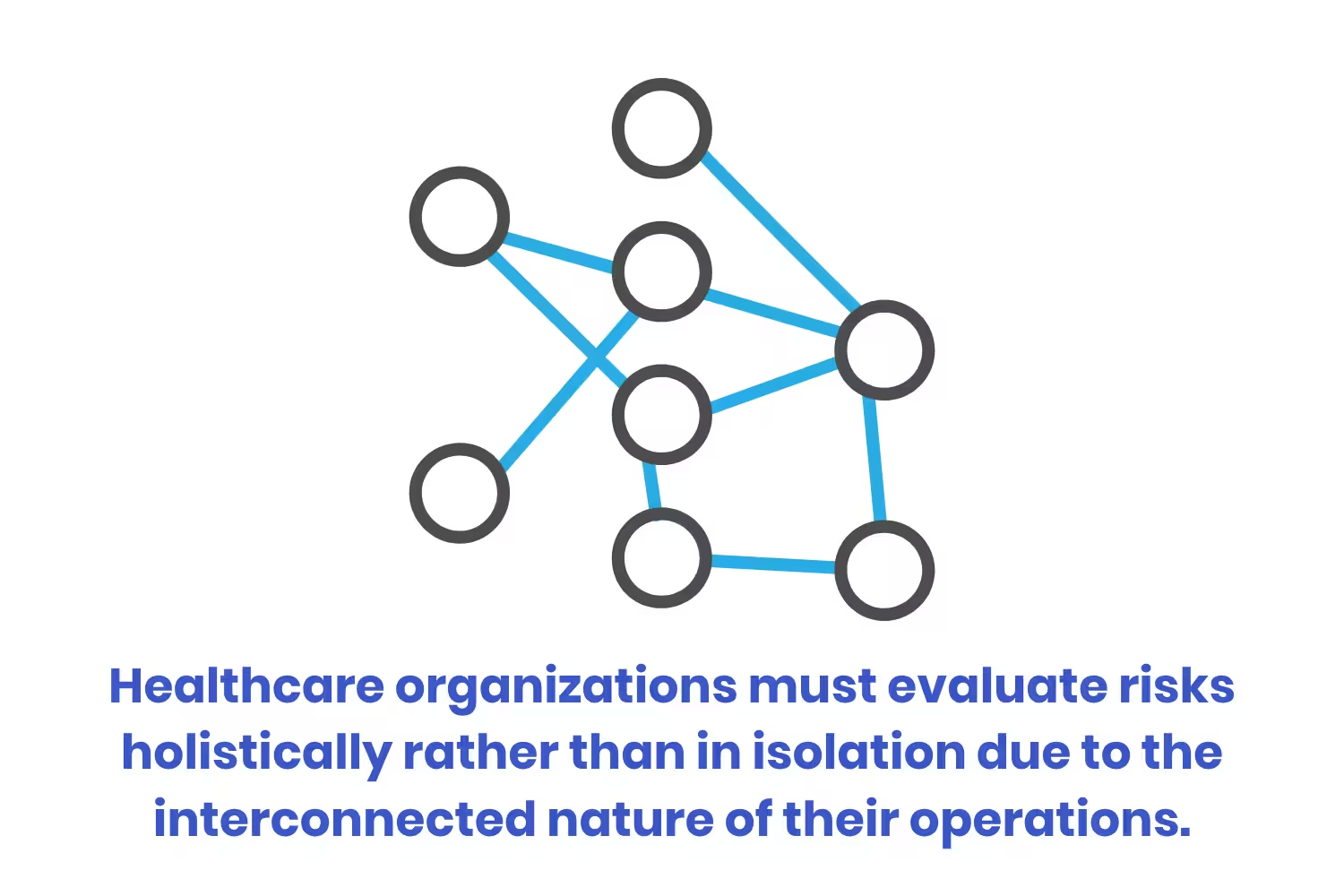
Modern healthcare environments contain a wide range of interconnected risk domains. A weakness in one area can quickly affect multiple departments and operations.
Common risk areas include patient care delivery, cybersecurity, workforce management, financial operations, third-party vendors, physical facilities, and emergency preparedness. Because healthcare operations are so interconnected, organizations must evaluate risks holistically rather than in isolation.
The process of conducting risk assessments requires leaders to look beyond obvious threats and examine underlying conditions that could contribute to future problems. This broader perspective helps organizations identify emerging risks before they become significant disruptions.
Effective risk management in healthcare plays a direct role in protecting patients. Every decision regarding staffing, technology, clinical workflows, and data security can influence patient outcomes.
When organizations actively engage in managing risk, they are better equipped to reduce preventable harm, improve care quality, and create safer environments for patients and staff. Strong risk management strategies help healthcare leaders address threats proactively while maintaining continuity of care.
Ultimately, the role of risk management extends beyond protecting the organization. It serves as a foundation for improving outcomes and advancing patient safety throughout the healthcare continuum.
Conducting effective risk analysis requires more than identifying threats. Organizations must understand the relationship between vulnerabilities, potential consequences, and existing controls.
An effective approach begins with gathering relevant data, engaging stakeholders, and evaluating operational processes. Leaders then analyze both the probability of an event occurring and the severity of its consequences. This information allows organizations to prioritize risks and allocate resources strategically.
Strong risk analysis and risk management practices enable healthcare leaders to make evidence-based decisions that support organizational goals while reducing exposure to harm.
One of the most effective tools for risk evaluation is the risk matrix. These frameworks help organizations compare risks by measuring both likelihood and impact.
By evaluating likelihood and severity, risk matrices provide a visual representation of organizational exposure. Leaders can quickly determine which threats require immediate attention and which can be monitored over time.
This approach supports effective risk prioritization, ensuring that limited resources are directed toward the most significant threats. By understanding the risk level associated with various scenarios, organizations can make more informed risk management decisions.
Healthcare organizations face a diverse range of risks that extend far beyond cybersecurity concerns.
Major risk domains include:
Understanding how these categories interact provides a more complete picture of the organization's overall exposure. A successful assessment evaluates risks across all major risk areas to create a more resilient organization.
Every assessment begins with risk identification. Once risks are identified, organizations evaluate contributing factors, determine exposure levels, and estimate potential outcomes.
The next step is risk characterization, which combines available information into a comprehensive understanding of each threat. This process helps leaders estimate the overall risk, determine priorities, and develop action plans.
The final outcome of the risk assessment should provide clear recommendations regarding mitigation efforts, resource allocation, and monitoring activities.
A successful assessment examines the broad range of factors that can affect organizational performance and patient care.
Healthcare leaders must identify both existing weaknesses and emerging threats that could impact operations. This requires evaluating technology systems, workforce challenges, regulatory obligations, and clinical processes.
A thorough assessment of the potential risks facing the organization provides the foundation for informed decision-making and long-term resilience.
Clinical risk refers to threats that may directly affect patient care and outcomes. Examples include medication errors, communication failures, delayed diagnoses, treatment complications, and procedural mistakes.
Because these risks can result in patient harm, reducing clinical risk remains a primary objective for healthcare leaders. Organizations must continually monitor care delivery processes and implement safeguards that improve quality and reduce adverse events.
Strong oversight of clinical risk contributes directly to improved patient safety and better outcomes across the organization.
Operational risk arises from failures involving people, processes, technology, or external events.
Examples include staffing shortages, technology outages, supply chain disruptions, equipment failures, and ineffective workflows. These issues can affect productivity, increase costs, and disrupt patient care.
Effective operational risk management focuses on strengthening business continuity, improving efficiency, and ensuring that healthcare providers can continue delivering care even during unexpected disruptions.
For many organizations, compliance risk remains one of the most significant concerns.
Healthcare organizations must comply with numerous regulations established by the Department of Health and Human Services and other governing bodies. Among the most important is the HIPAA Security Rule, which requires covered entities to perform an accurate and thorough assessment of the potential risks and vulnerabilities affecting protected information.
The Health Insurance Portability and Accountability Act requires organizations to protect the confidentiality, integrity, and availability of electronic protected health information. This includes evaluating electronic protected health information held within networks, applications, databases, and connected systems.
Maintaining strong regulatory compliance practices helps organizations reduce legal exposure, protect sensitive data, and strengthen stakeholder trust.
As risks continue to evolve, organizations require a structured and repeatable approach for managing them. A strong risk management framework provides the foundation for identifying, evaluating, and responding to threats across the enterprise.
Rather than treating risks as isolated events, organizations should adopt a comprehensive framework that aligns governance, operations, compliance, and patient care objectives.
Enterprise risk management allows organizations to evaluate risks from a strategic perspective.
Rather than focusing on individual departments, ERM examines how risks affect the organization as a whole. This broader view supports more effective planning, resource allocation, and decision-making.
An integrated risk approach helps healthcare leaders understand relationships between different threats and improve the organization's ability to respond to uncertainty.
Once risks have been identified and prioritized, organizations must implement controls that reduce exposure.
Effective risk mitigation may include strengthening cybersecurity controls, updating policies, improving employee training, enhancing monitoring systems, or redesigning operational workflows.
Organizations that successfully develop and implement risk reduction initiatives are better positioned to respond to emerging threats. These actions help mitigates risk while improving organizational resilience.
A dedicated risk manager plays a critical role in coordinating assessment activities and supporting organizational oversight.
Because many departments are involved in risk management efforts, centralized leadership helps ensure consistency and accountability. A skilled risk manager can facilitate communication, monitor progress, and support continuous improvement initiatives.
The success of an organization's risk management process often depends on having clear ownership and strong leadership.
Risk management is not a one-time activity. New technologies, regulations, threats, and operational challenges constantly reshape the healthcare landscape.
To remain effective, organizations must continually evaluate and improve their assessment processes.
A successful risk assessment process requires ongoing review. Organizations should routinely reassess controls, evaluate emerging threats, and update risk registers to reflect changing conditions.
This practice helps organizations estimate the risk associated with new initiatives and maintain an accurate understanding of their current exposure.
Technology plays an increasingly important role in effective risk assessment efforts.
Advanced analytics, monitoring platforms, automation tools, and reporting systems help organizations identify trends, improve visibility, and strengthen decision-making. These capabilities support a more proactive approach to managing risk while improving operational efficiency.
Technology alone cannot create a successful risk program. Organizations must also build a culture where employees understand their role in identifying and reporting concerns.
A strong culture of safety risk awareness encourages accountability, communication, and continuous improvement. When employees actively participate in risk-related activities, organizations become more resilient and adaptable.
This culture supports long-term success across the entire healthcare system and reinforces the organization's commitment to patient care and operational excellence.
As healthcare organizations face growing clinical, operational, cybersecurity, and compliance challenges, maintaining a structured approach to risk management becomes increasingly important. Many organizations rely on governance, risk, and compliance (GRC) platforms to centralize risk-related activities, improve visibility, and support continuous improvement.
K2 GRC helps healthcare organizations operationalize their risk management programs by providing tools to identify and assess risks, document mitigation efforts, assign tasks, track progress, and maintain evidence for audits and regulatory requirements. Organizations can manage risk assessments, policies, procedures, employee training, and supporting documentation from a single platform.
Whether addressing HIPAA Security Rule requirements, strengthening patient safety initiatives, or implementing enterprise risk management practices, K2 GRC enables healthcare leaders to create a more proactive and resilient approach to managing risk across the organization.
Healthcare organizations operate in an environment where risks are constantly evolving. From cybersecurity threats and regulatory obligations to patient care challenges and operational disruptions, leaders must proactively identify and address vulnerabilities before they result in serious consequences.
A comprehensive risk assessment provides the foundation for effective decision-making. Through structured risk analysis, proactive risk management, and continuous monitoring, organizations can better protect patients, strengthen compliance, and improve long-term resilience.
As healthcare continues to evolve, organizations that invest in strong healthcare risk management programs will be better equipped to reduce uncertainty, improve outcomes, and maintain trust. By establishing a mature risk management framework, adopting enterprise risk management principles, and continuously improving assessment processes, healthcare leaders can create safer, more secure, and more effective organizations for the future.