Welcome to version 17.0.0! This major release introduces powerful new Risk Scenario Simulations, enhanced training controls with Module Builder Steps, and a variety of performance upgrades and bug fixes to make your experience smoother and faster.
🌟 Highlights & Key Features
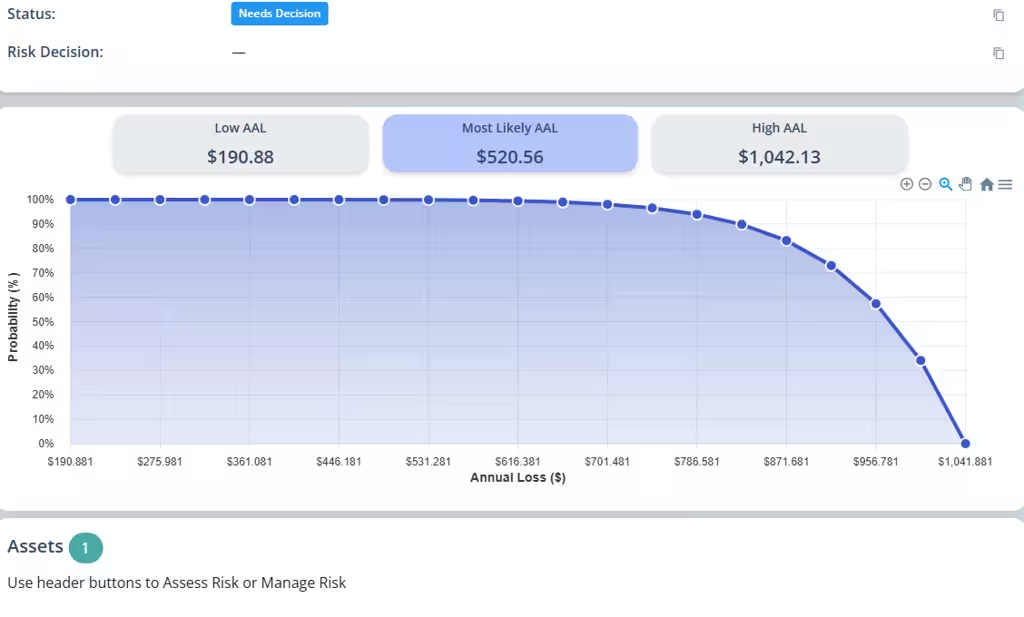
Risk Scenario Simulations: You can now run detailed simulations against your Risk Scenarios to better understand and prepare for potential threats.
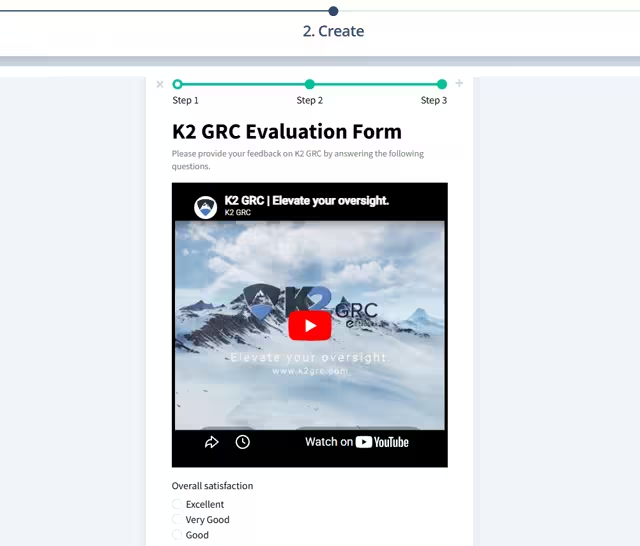
Module Builder Steps for Training: Ensure your workforce completes their training at the right pace. The new "Steps" concept in Module Builder allows you to guide users through training modules step-by-step.
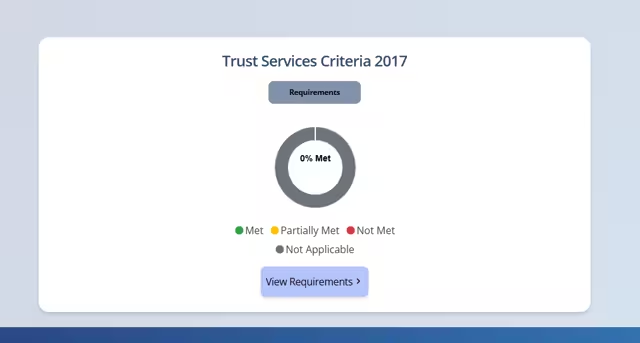
Enhanced Compliance Visibility: The Compliance Framework page now visually displays Tracked Requirements in easy-to-read charts.
🛠️ Service Updates
Risk & Compliance
SSP Reports: Cleaned up the System Security Plan (SSP) Report display so it now shows a single Control Origination.
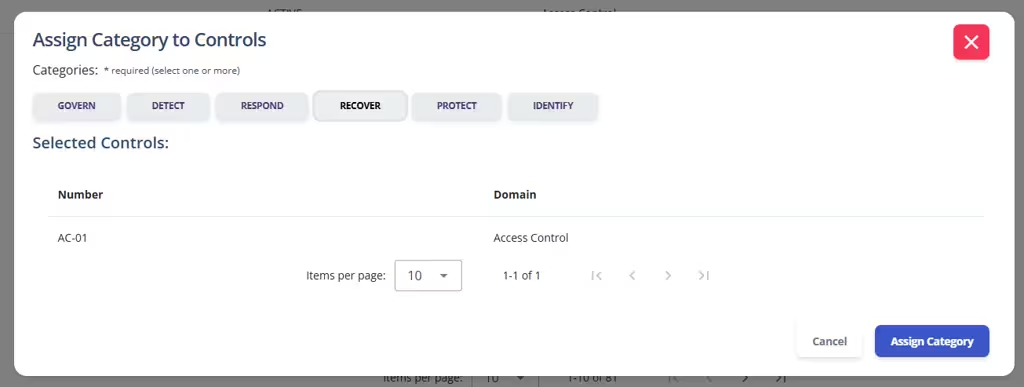
Control Categories: Updated the Control Category classifications to align with industry standards (Govern, Detect, Respond, Recover, Protect, Identify).
Workforce Enhancements: "Responsible Party" is now a required field on Workforce profiles. We have also added a new Active/Inactive status toggle for better workforce management.
🐛 Bug Fixes & Stability
Performance: Significantly shortened the load times for Tasks!
Session Timeouts: Fixed a highly requested bug where the automatic timeout would incorrectly kick users out after exactly one hour, regardless of whether they were actively using the platform.
Plan of Actions (POAs): Resolved an issue that was preventing POAs from being created.
UI Inconsistencies: Fixed bugs related to inconsistent PDF uploads and corrected the display columns (Responsible Party and Framework) on the Requirement Page.
Learn how to build an AI risk management policy that addresses governance, risk appetite, AI security risks, regulatory requirements, and ongoing monitoring.
A risk register helps organizations identify, assess, and manage potential risks in one centralized place. Learn the key components of a risk register, how to create and maintain one, and how it supports a more proactive approach to risk management.
Risk management in healthcare helps organizations identify, assess, and reduce risks that can impact patient safety, compliance, operations, and finances. Learn practical strategies for building a proactive risk management program and prioritizing the risks that matter most.