🛡️ Streamlining Compliance: The Strategic Value of a Common Controls Framework (CCF)
With the global cost of a data breach estimated at $4.4 million in 2025, strict adherence to cybersecurity compliance is critical. However, organizations frequently waste resources tracking redundant controls across overlapping regulatory frameworks (e.g., SOC 2, ISO 27001, PCI DSS). A Common Controls Framework (CCF) eliminates this duplication by mapping shared requirements into a single, unified catalog—allowing teams to test a control once and satisfy multiple audits simultaneously.
How a CCF Modernizes Cybersecurity Governance
🗺️ Control Mapping: CCFs map individual, overlapping compliance requirements (like strong passwords or data encryption) to a single shared control policy, drastically reducing the existing control environment's complexity.
⚡ Audit Efficiency & Scalability: Auditors review evidence in one centralized GRC system. When a company needs to meet a new regulatory standard, the new framework is mapped to existing controls rather than starting from scratch.
🏢 Core CCF Domains: A unified framework is logically categorized into domains such as Access Control, Data Protection, Incident Response, and Vendor Management for comprehensive risk coverage.
📊 GRC Software Integration: Managing a CCF via a spreadsheet quickly becomes prone to human error. GRC software (Governance, Risk, and Compliance) automates control testing, evidence collection, and audit status tracking across all mapped frameworks.
Experts estimated that in 2025, the global cost of a data breach was about 4.4 million USD. With that in mind, it's easy to see why organizations are cracking down on their compliance habits. But what if your company needs to meet more than one compliance rule?
One security framework wants proof of strong passwords. Another wants proof of the same thing, written a different way. A third wants it again, in its own format. Before long, your team is doing the same work over and over, just to satisfy different rulebooks. This can be a huge waste of time and resources.
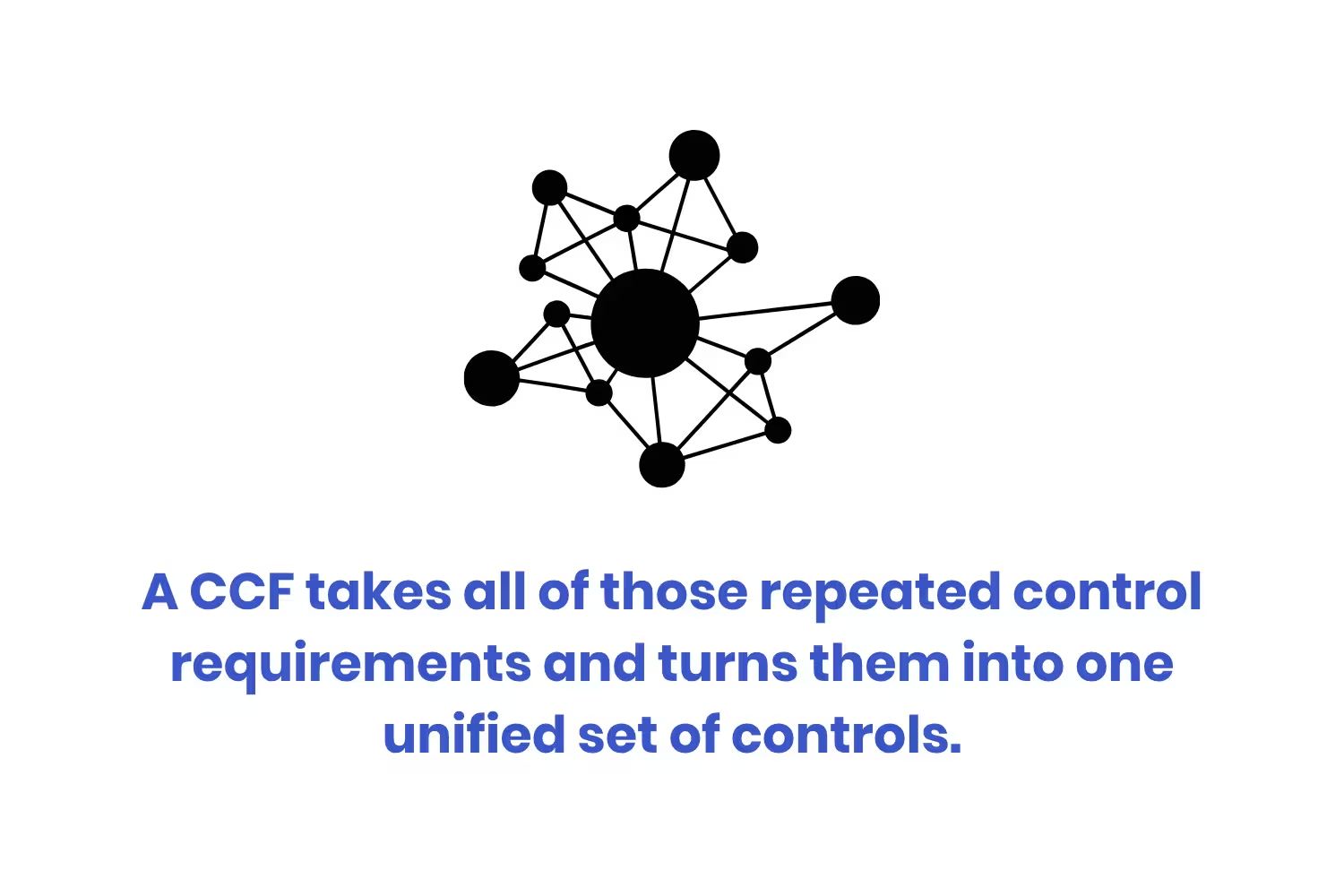
This is where a common control framework comes in. A CCF takes all of those repeated control requirements and turns them into one unified set of controls. Instead of managing separate controls for every compliance framework, a company builds one strong system and maps it to everything it needs to satisfy. From ISO 27001 and SOC 2, to NIST and PCI DSS.
In this post, we will break down what a common controls framework is, how it works, and why more companies are using one to simplify cybersecurity and compliance.
What Is a Common Controls Framework (CCF)?
A common controls framework (CCF) is a master list of security controls. Companies use it to meet many compliance rules at once. Instead of tracking each rule one by one, a company builds one single set of controls. That set covers many rules at the same time.
Think of it like a universal remote. Instead of using five remotes for five devices, you use one remote for all of them. A control framework works the same way for a compliance program. It helps a company unify its security and compliance work instead of managing separate controls for every rule.
Most companies today do not just follow one rulebook. A tech company might need to prove it follows multiple compliance frameworks at once. Without a CCF, that means more separate lists of control requirements to track.
How Does a Common Controls Framework Work?
A CCF works by finding the controls that show up in more than one compliance framework. Many regulatory requirements ask for similar things. For example, most frameworks such as PCI DSS, SOC 2, and ISO 27001 require strong passwords, data encryption, and access control.
A CCF groups these shared control requirements into one unified control. It mentions each control one time. Then it applies it across every specific framework that needs it. This is sometimes called a unified control catalog, because it brings industry information security and privacy standards together in one place.
A CCF usually works through four simple steps:
Find the control requirements that repeat across different rulebooks.
Mapped each requirement to one shared control.
Write one clear policy or procedure that satisfies every rule it supports.
Watch and test the control on an ongoing basis, so it stays ready for any audit.
Common Controls Framework vs. Traditional Compliance Frameworks
Traditional compliance frameworks focus on one standard at a time. A company might track individual controls for SOC 2, another set for HIPAA, and another for ISO 27001. Each cybersecurity framework runs on its own. This creates repeated work and a messy existing control environment.
A common control framework removes that repeated work. It pulls the shared pieces from each security standard into one core framework. Teams do the work once and reuse it many times. This saves time and effort compared to managing multiple frameworks with separate controls.
What Is Control Mapping?
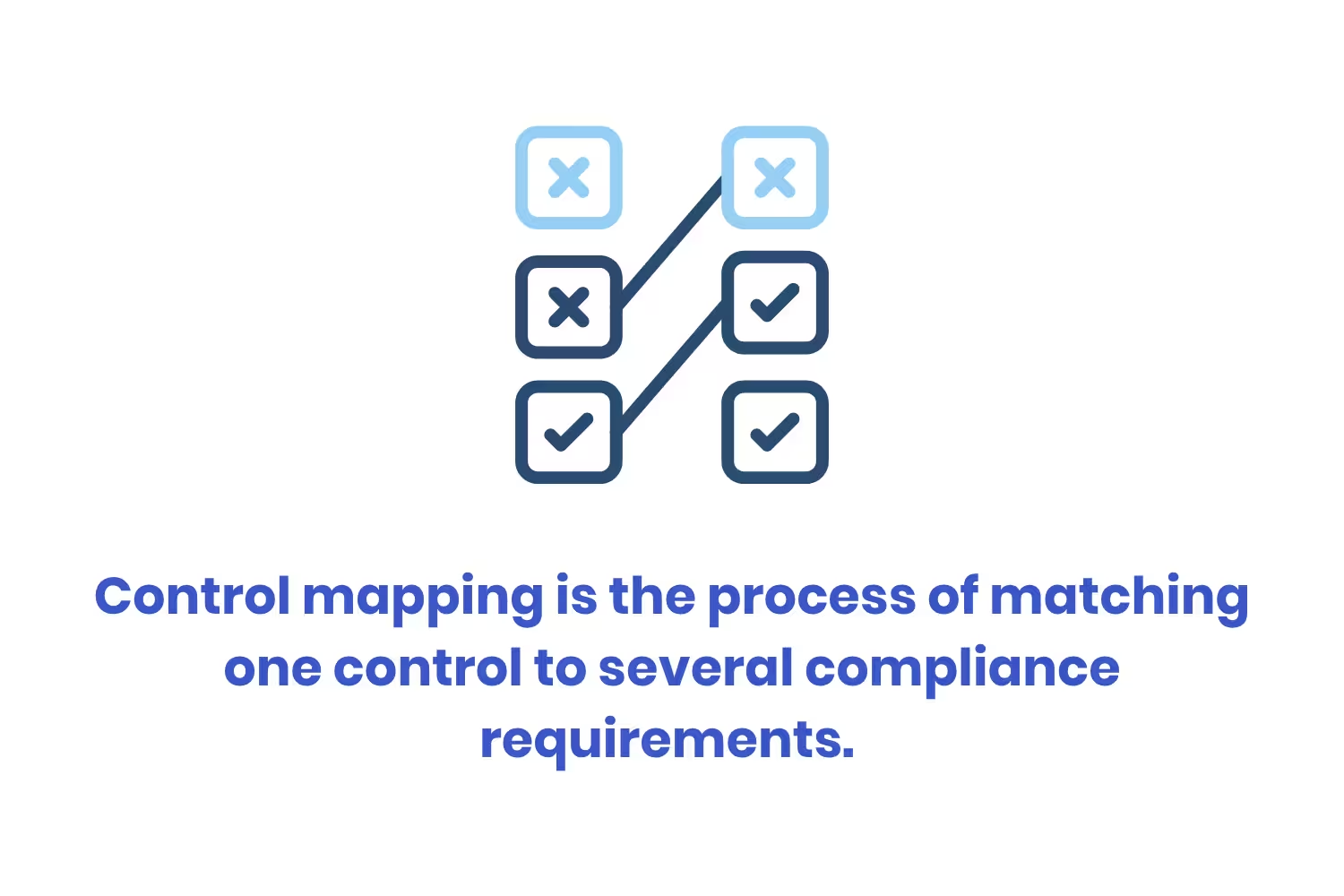
Control mapping is the process of matching one control to several compliance requirements. You might map a single access control policy to framework requirements in SOC 2, PCI DSS, and NIST at the same time.
Control mapping shows where frameworks overlap. It helps teams see which controls already cover several rules. This is what allows a company to design unified controls and avoid overlapping controls that do the same job twice.
This table becomes the company's master reference. When an auditor asks for proof, the team can point straight to the mapped control instead of digging through old records.
Benefits of Implementing a Common Controls Framework
Reduce Compliance Duplication
A CCF cuts down on repeated tasks. Teams no longer prove the same control works for five different certifications. They prove it once and use that proof everywhere it applies. This is the heart of implementing a common controls framework: fewer repeated steps, less overlap, and one control set instead of many.
Simplify Audit Preparation
Audits become easier because evidence lives in one place. An auditor can see how one control supports many compliance efforts. This is far better than tracking everything in a spreadsheet. A clear framework helps a team simplify how it gets ready for any audit, since you can reuse the same proof across every review.
Improve Cybersecurity Governance
A CCF gives leaders a clear view of the company's security posture. Instead of scattered records, there is one central system. This makes it easier to manage risk and support strong governance across the whole compliance program.
Create Consistent Security Controls
When you share security controls across the company, they stay consistent. Every team follows the same best practice. This lowers the risk of gaps caused by different teams handling cyber risk in different ways.
Scale Compliance Across Frameworks
As a company grows, it often needs to meet new requirements. A CCF makes this easier. Teams can map a new framework to existing controls instead of starting from scratch. This helps the whole compliance program evolve over time.
Common Controls Framework and GRC
GRC stands for governance, risk, and compliance. A CCF supports all three parts of GRC. It supports governance by setting clear rules. It supports risk management by showing where controls reduce risk. It supports compliance by mapping controls to many security standards at once.
Many companies use GRC software, like K2 GRC, instead of a spreadsheet to manage their common control framework. A spreadsheet works fine for a small list of controls. But once a company tracks hundreds of controls across many frameworks, this becomes hard to update and prone to human error.
GRC software tracks controls, evidence, and audit status in one place. This helps the whole team stay in alignment with the frameworks they must follow. It also lets leaders check compliance program health at a glance instead of chasing down updates.
Common Controls Framework Domains
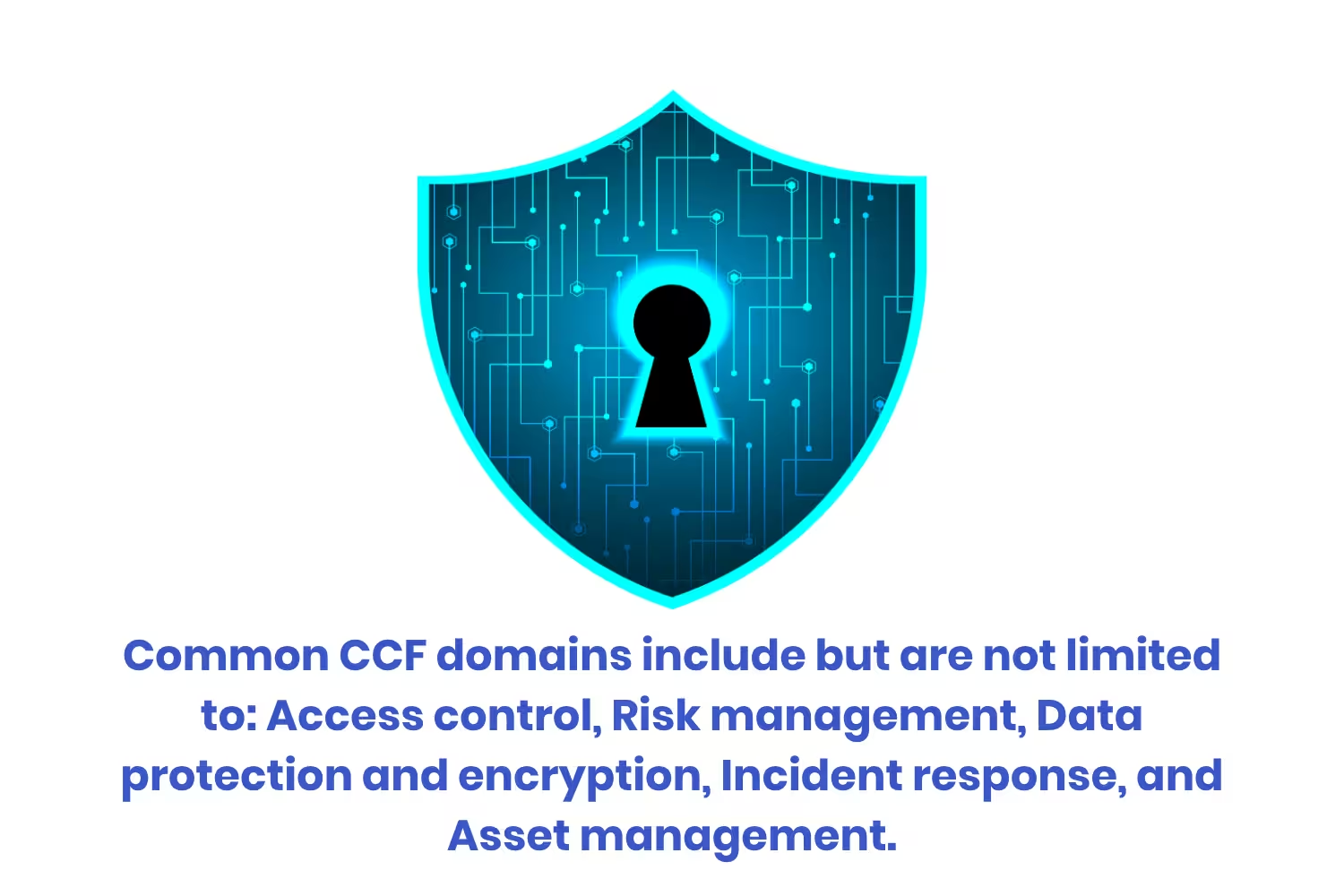
A CCF is often organized into domains. A domain is a group of related controls. Common domains include:
Access control
Risk management
Data protection and encryption
Incident response
Asset management
Change management
Vendor and third-party management
Security awareness and training
Physical and environmental security
Continuous monitoring
Each domain holds the controls that relate to that topic. This structure makes the framework easier to navigate and manage. It also supports a comprehensive cybersecurity and data privacy approach across the company.
Large, mature frameworks like the SCF may split these ideas into 30 or more separate domains, while a smaller company might combine them into a shorter list to start.
How to Implement a Common Controls Framework
Implementing a CCF involves several clear steps. Here is how most teams approach implementing a common controls framework.
1. Identify Your Compliance Requirements
Start by listing every compliance requirement your company must follow now. Plus, any you expect to face soon. This might include SOC 2, HIPAA, PCI DSS, or other security certifications your customers ask for.
2. Inventory Your Existing Controls
Look at the existing controls you already have in place. Write down what each control does and which regulatory requirement it supports. This step is where many teams find they need to link each control to its purpose for the first time.
3. Identify Overlapping Requirements
Compare your compliance frameworks side by side. Find the control requirements that repeat across frameworks. Especially in areas like access control, incident response, and vendor management. These are the best candidates for a common control.
4. Build Your Common Control Set
Create one control for each overlapping requirement. Write clear, simple descriptions so every team understands what the control does. Pro tip: write the control to match the strictest framework requirements in the group, so it also satisfies the easier ones. This becomes your unified set of controls.
5. Map Controls to Applicable Frameworks
Connect each control to every framework it satisfies. This control mapping becomes your reference guide during any audit. Keep it up to date as an SCF control or a framework changes.
6. Assign Control Ownership
Give each control an owner. This person or team is responsible for keeping the control working and up to date as security practices change.
7. Monitor and Update Controls
Compliance rules change over time. Security frameworks update on their own schedule, so review your controls regularly. Update them when a rule changes or a new framework gets added, so your program continues to evolve instead of falling behind.
Common Challenges When Implementing a CCF
Building a CCF is not always simple. You'll find that few challenges tend to come up again and again.
These include, but are not limited to:
Different wording, same idea. Frameworks often describe the same control requirements using different words or different levels of detail. Matching them correctly takes careful review, not just a quick word search.
Keeping the framework current. Security standards like NIST CSF, ISO 27001, and PCI DSS get updated every few years. A CCF that is not reviewed after an update can quietly fall out of date.
Getting the whole company involved. A CCF built only by the compliance team, without help from IT and security staff, is hard to keep running. Control testing and evidence collection need cooperation from the people who actually operate the systems.
Build a More Efficient Approach to Cybersecurity Compliance
A common controls framework turns a messy, repeated compliance process into one clear system. It saves time, reduces stress, and helps teams stay audit-ready all year, not just before a deadline.
Companies that adopt a CCF spend less time on duplicate work and more time on real cybersecurity improvements. As compliance needs grow, a common controls framework gives teams a strong, scalable base to build on. It also helps protect the company's organization's security posture for the long run.
❓ Common Controls Framework (CCF) FAQ
What is the primary difference between a traditional compliance framework and a CCF?
Traditional compliance requires teams to manage controls individually for every specific standard (e.g., separate tracking for SOC 2, HIPAA, and ISO 27001), leading to massive duplication of work. A **Common Controls Framework (CCF)** pulls the shared requirements from all these standards into one master list, allowing a team to perform and document a security task just once to satisfy multiple audits simultaneously.
What does "control mapping" mean in cybersecurity?
Control mapping is the process of matching one unified security control to several different compliance requirements. For example, by mapping a single Access Control policy to the specific requirements found in SOC 2, PCI DSS, and NIST, teams can clearly see where regulatory rules overlap and avoid designing overlapping controls that do the same job twice.
Why should an organization write unified controls to match the "strictest" framework requirement?
When combining overlapping requirements into one unified control, it is best practice to design the control to satisfy the strictest or most complex framework in the group. By meeting the highest standard, the control will automatically satisfy all of the easier, less rigorous requirements from the other frameworks mapped to it.
Why is GRC software recommended over spreadsheets for managing a CCF?
While spreadsheets work for very small control lists, they become highly prone to human error and difficult to update once a company tracks hundreds of mapped controls across multiple frameworks. **Governance, Risk, and Compliance (GRC) software** tracks controls, links audit evidence, and monitors compliance health dynamically in one centralized dashboard.
Learn how to build an AI risk management policy that addresses governance, risk appetite, AI security risks, regulatory requirements, and ongoing monitoring.
A risk register helps organizations identify, assess, and manage potential risks in one centralized place. Learn the key components of a risk register, how to create and maintain one, and how it supports a more proactive approach to risk management.
Risk management in healthcare helps organizations identify, assess, and reduce risks that can impact patient safety, compliance, operations, and finances. Learn practical strategies for building a proactive risk management program and prioritizing the risks that matter most.