🤖 Navigating AI Risk Management & Generative AI Governance
As artificial intelligence adoption accelerates, so does operational risk—96% of leaders believe adopting generative AI makes a security breach more likely. To safely harness AI across departments without stifling innovation, organizations must move beyond generic policies and implement a structured Artificial Intelligence Risk Management Framework (AI RMF) to govern usage, secure data, and ensure regulatory compliance.
Core Components of AI Risk Management
🧭 The NIST AI RMF: Released in 2023, this highly adaptable framework organizes AI risk into four continuous functions: Govern (policies and accountability), Map (contextual identification), Measure (analysis and tracking), and Manage (prioritized mitigation).
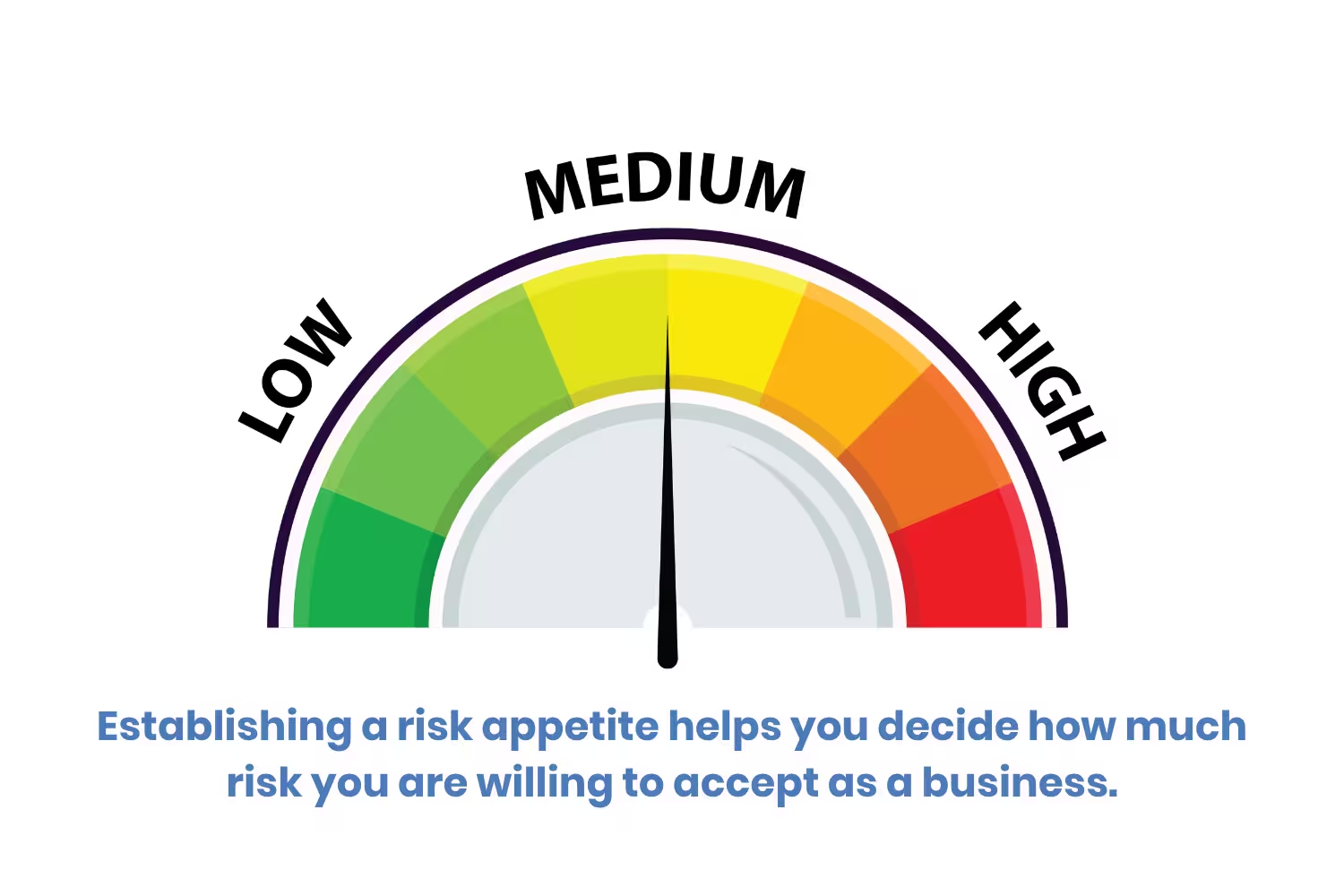
⚖️ Defining Risk Appetite: Organizations must categorize AI use cases by risk level. An internal text-summarization tool carries minimal risk, while an AI system processing confidential patient data or influencing critical financial decisions requires strict human oversight.
🕵️ Combatting Shadow AI: Generative AI's widespread accessibility means employees often adopt unsanctioned tools. A robust policy provides clear boundaries on approved platforms and explicitly outlines what proprietary data is prohibited from being entered into public AI prompts.
🌍 Regulatory Alignment: The legal landscape, spearheaded by the risk-based EU AI Act, requires organizations to integrate AI governance into their existing enterprise risk and cybersecurity frameworks rather than treating it as an isolated IT project.
96% of leaders believe that adopting generative AI makes a security breach more likely. With artificial intelligence rapidly evolving, risks associated with AI systems are evolving, too.
Many organizations already deploy AI systems across departments. Employees use it to write, research, code, and analyze data. Some teams use AI to help make large business decisions. Each use case brings its own set of risks. Without clear rules, it's hard to know how it could negatively affect your company.
That's where AI risk management comes in. After all, the goal isn't to stop AI deployment. It's to help encourage responsible AI use.
In this guide, you'll learn what an AI risk management policy is. We'll cover key components, from AI governance frameworks to risk appetite and ongoing monitoring. We'll also look at common AI security risks and how regulations like the EU AI Act fit in. Let's get into it!
What is Artificial Intelligence Risk Management?
Artificial intelligence risk management looks at the risks AI systems can create. This includes development, implementation, deployment, and ongoing use.
As organizations adopt AI systems, they may add new AI tools across departments. An effective approach to AI risk management helps organizations do three things. They can understand where risks exist. They can decide how to address those risks. They can also establish appropriate oversight.
The goal isn't to eliminate every possible risk. Instead, effective AI risk management requires organizations to understand their risk exposure. They also need to establish controls that match the potential impact of each AI use case.
What is a Risk Management Framework?
A risk management framework provides a structured approach for identifying and addressing risk. An artificial intelligence risk management framework applies these principles to AI systems. It helps identify the risks they can introduce.
Organizations can use a framework to establish a consistent risk management strategy. Rather than evaluating each individual AI project, a framework creates repeatable processes. These processes cover risk identification, assessment, mitigation, documentation, and monitoring.
Frameworks can also help organizations connect AI governance with existing risk management and regulatory compliance programs.
NIST AI Risk Management Framework
The NIST AI Risk Management Framework (AI RMF) is a common framework. The National Institute of Standards and Technology released it in 2023. It's design is flexible and can apply across industries and AI technologies.
The NIST AI RMF organizes AI risk management around four core functions:
Govern: Establish policies, accountability, and organizational structures for AI risk.
Map: Identify and understand the context and risks associated with an AI system.
Measure: Analyze and track AI risks using appropriate assessments and measurements.
Manage: Prioritize and address identified risks.
Other frameworks can also contribute to an organization's approach. ISO 42001, for example, provides an AI management system framework. It includes guidance on AI governance, risk assessment, system performance, and documentation.
The important point is not simply selecting a framework. Organizations still need to translate framework guidance into policies, procedures and controls. As well as responsibilities and ongoing processes. These should fit their specific use of AI.
Key Components of an AI Risk Management Policy
An AI risk management policy covers how organizations manage risks that come with using AI. It also establishes the organization's expectations for developing, purchasing, deploying, and using AI.
A strong policy should explain four things. It should state what falls within its scope. It should say who handles oversight. It should describe how to properly evaluate risks. And it should explain what happens when risks exceed the organization's defined tolerance.
The policy should also connect to existing risk management processes. Such as security, privacy, compliance, and enterprise. It should not operate as a completely separate program.
Establish AI Governance
AI governance establishes accountability for how businesses develop, buy, deploy, and use AI.
A governance structure should identify who handles AI oversight. It should also show how to make decisions about AI use cases. Depending on the organization, this may involve compliance, legal, IT, or other teams.
Governance should also address AI ethics and the organization's expectations for trustworthy AI. This can include principles around transparency, accountability, fairness, privacy, security, and human oversight.
Clear governance helps ensure you use AI consistently with your broader risk management strategy.
Define Your Organization's Risk Appetite
Not every AI use case carries the same level of risk. Establishing a risk appetite helps you decide how much risk you are willing to accept as a business.
For example, an organization may consider an internal productivity tool minimally risky. It may apply stricter requirements to an AI system that processes sensitive information. Or one that influences important decisions.
A risk appetite can establish:
Which AI use cases are acceptable.
Which uses need more review.
Which systems require human oversight.
Which risks require mitigation before deployment.
Which uses may exceed the organization's risk tolerance.
Defining risk appetite gives teams a way to make decisions based on risk levels. It means they don't treat every AI system the same way.
Identify and Assess AI Risks
Risk identification should happen before deploying an AI system. Not after something goes wrong.
Organizations should evaluate the intended use of an AI system. They should look at the data it processes and how its outputs will be used. They should also ask what could happen if the system produces inaccurate results.
A risk assessment may examine:
Security vulnerabilities.
Privacy and data protection.
Accuracy and reliability.
Bias in AI and discrimination.
Regulatory requirements.
Transparency and explainability.
The assessment should also consider the entire AI lifecycle. This runs from development and testing through deployment and ongoing monitoring.
Establish AI Risk Management Practices
Once an organization identifies risk, they need controls and processes to address them.
Risk mitigation can include:
Technical controls.
Policies.
Employee training.
Testing.
Monitoring.
Access restrictions.
Human review.
Vendor requirements.
Incident response procedures.
For example, an organization may need human review before an AI system's output can be used. It may also restrict employees from entering confidential information into public AI tools.
Risk management practices should be documented and repeatable. That way, teams can consistently evaluate new AI use cases. They can also respond when existing systems change.
Monitor AI Systems and Emerging Risks
AI risk management continues after deploying an AI system.
AI systems often change over time. Data changes, vendors modify platforms, and employees discover new ways to use them. AI technologies evolve quickly, which makes ongoing monitoring especially important.
Organizations should track AI systems for changes in performance and accuracy. They should also watch for changes in security, bias, and other risk indicators.
Monitoring ensures that AI systems continue to operate within their approved risk tolerance.
Document and Review AI Risk Decisions
Documentation creates accountability. It also gives organizations evidence of how organizations evaluated and managed AI risks.
An organization may maintain records covering AI system inventories, risk assessments, and incidents. As well as testing results, approval decisions, and control activities. This is not an exhaustive list, but the point is that maintaining an AI system inventory is important.
The inventory can identify what AI systems the organization uses. It can also show who owns them, what they use them for, and their associated risk level. This is helpful to have in case of an audit or legal trouble.
The policy itself should also have a defined review schedule. AI technologies, regulations, and organizational AI practices all evolve. Prioritize keeping up with the changes.
Common Risks Associated With AI
The risks associated with AI technologies vary. It's usually based on how companies develop the AI, deploy it, and use it. Organizations should consider the following areas when building an AI risk management program.
Data Privacy and Security
AI systems may process sensitive, confidential, or regulated information. Employees who use an AI system may also share information with an external AI tool by accident.
Security risk assessments should consider how to collect information. As well as how to safely store, send, and protect it.
Accuracy and Reliability
AI systems can generate inaccurate or unexpected outputs. Organizations should establish appropriate validation and human review requirements. This matters most when AI outputs could affect important business decisions.
Bias and AI Ethics
AI models can reflect biases present in their training data or development processes. Organizations should consider whether an AI system could produce unfair or discriminatory outcomes. They should also decide whether extra testing or oversight is necessary.
AI ethics should be built into risk assessments. It should not be treated as a separate consideration.
Shadow AI
AI systems are increasingly easy to access. This means employees may adopt AI tools without formal approval.
Organizations should establish clear policies for acceptable AI use. They should also maintain visibility into the AI systems across the organization.
Third-Party AI Risk
Organizations often rely on vendors when implementing AI. Vendor assessments should consider security, data retention, model training practices, and contractual requirements. It also covers how responsibility for AI risks divides between vendor and customer.
Regulatory and Compliance Risk
The regulatory landscape surrounding AI continues to develop. Organizations should test applicable requirements based on their industry, location, and data. They should also take AI use cases into consideration, too.
How to Manage AI Risk and Generative AI
Generative AI systems have made implementing AI easier for organizations and employees. At the same time, accessibility creates new governance challenges.
Employees may use generative AI for research, writing, coding, analysis, and other tasks. Without clear requirements, organizations may have limited visibility into which tools employees use. They may also not know what information they are sharing.
An approach to AI risk should establish clear expectations for generative AI use. Expectations may include:
Approved AI tools.
Prohibited uses.
Information that can be entered into AI systems.
Human review requirements.
Validation of AI-generated outputs.
Data privacy expectations.
Reporting requirements for AI-related incidents.
Organizations should also consider how their controls apply in two different cases. One is developing and deploying AI internally. The other is purchasing AI capabilities from third-party vendors.
The goal of AI risk management is not necessarily to prevent AI use. Instead, a clear policy helps organizations manage AI responsibly. It also helps employees understand how they can use AI within established boundaries.
AI Governance and Regulatory Requirements
The growing adoption of AI has created a changing regulatory environment. An AI risk management program should be thorough. Addressing both internal governance requirements and applicable external regulations.
Risk management and regulatory compliance should work together. They should not operate as separate processes. Organizations can build regulatory requirements into their risk assessments. They can add them into their controls, documentation, and monitoring practices, too.
The EU AI Act and AI Risk Management
The EU AI Act uses a risk-based approach to AI regulation. Different requirements may apply. This depends on the type and level of risk associated with an AI system.
For high-risk AI systems, requirements can be more extensive. Including tasks like risk management, data governance, technical documentation, and human oversight. Organizations should decide whether the EU AI Act applies to their AI activities. They should also understand the specific requirements that may apply.
This is why you should evaluate AI systems by their intended use and potential impact. Applying identical controls to every system won't work.
Aligning AI Governance With Existing Risk Frameworks
Organizations do not necessarily need to create an entirely separate program for AI.
An artificial intelligence risk management framework can connect with existing programs. Including enterprise risk management, cybersecurity, privacy, vendor risk, and compliance.
This allows organizations to build on existing risk management processes. All while adding controls specific to AI.
Frameworks such as the NIST AI RMF can also provide a common structure. This structure can help integrate AI governance into an organization's broader strategy.
Preparing for Evolving AI Regulations
The landscape of AI risk continues to change. Organizations adopt new technologies, and regulators establish new requirements.
Organizations should periodically review their AI risk management policy, risk assessments, and controls. This helps ensure they remain appropriate as regulations and AI use cases evolve.
Implement Effective AI Risk Management Framework
An effective AI risk management program turns policy into an ongoing process. Implementing AI risk management requires organizations to identify their AI systems. It pushes them to also assess associated risks and establish controls. They must also watch those systems throughout the entire AI lifecycle.
A comprehensive AI risk management strategy can follow these steps:
Identify the AI systems your organization uses.
Classify potential risks.
Establish your risk appetite.
Define controls and risk management practices.
Assign governance responsibilities.
Monitor and document AI risks.
Review and update the policy regularly.
How AI Risk Management Helps Organizations
AI development is moving fast. New tools, new use cases, and new regulations show up all the time. A clear AI risk management policy helps organizations keep up without slowing down.
With a strong program and framework in place, teams can use AI responsibly. Everyone knows who is accountable, which uses are ok, and when they need extra review. Your team can catch risks early, not after something goes wrong.
AI systems must also stay within your approved use cases and risk appetite. That takes ongoing monitoring, solid documentation, and regular policy reviews. When you build these habits across the AI lifecycle, your controls stay current as AI changes.
You don't have to do it all at once. Start by identifying the AI systems your organization uses. Then define your risk appetite and assign clear owners. From there, you can build a repeatable program that lets your teams use AI with confidence.
❓ AI Risk Management & Governance FAQ
What is the NIST AI Risk Management Framework (AI RMF)?
The NIST AI RMF is a structured, flexible guideline released in 2023 by the National Institute of Standards and Technology. It helps organizations safely deploy AI by organizing risk management around four core, continuous functions: Govern, Map, Measure, and Manage.
What is "Shadow AI" and why is it a risk?
Shadow AI refers to the unauthorized use of artificial intelligence tools by employees without formal IT or compliance approval. Because tools like generative AI chatbots are easily accessible, employees may unknowingly expose sensitive company data, source code, or confidential client information to public models.
How does the EU AI Act impact corporate AI governance?
The EU AI Act takes a strict, risk-based approach to regulation. Systems classified as "high-risk" face extensive requirements surrounding data governance, transparency, and continuous human oversight, legally forcing companies to maintain rigorous technical documentation and impact assessments.
Do organizations need to create a completely separate department for AI Risk?
No. In fact, it is highly recommended that organizations seamlessly integrate AI governance into their pre-existing enterprise risk frameworks—including their established cybersecurity, vendor management, and data privacy compliance programs.
Learn how to build an AI risk management policy that addresses governance, risk appetite, AI security risks, regulatory requirements, and ongoing monitoring.
A risk register helps organizations identify, assess, and manage potential risks in one centralized place. Learn the key components of a risk register, how to create and maintain one, and how it supports a more proactive approach to risk management.
Risk management in healthcare helps organizations identify, assess, and reduce risks that can impact patient safety, compliance, operations, and finances. Learn practical strategies for building a proactive risk management program and prioritizing the risks that matter most.