This blog explains how an incident response policy helps organizations prepare for, detect, and recover from security incidents. It walks through how to build a structured plan, define roles, and test your response so your team can act quickly and confidently during a crisis.
Key Takeaways
✅ Build a clear incident response policy with defined roles, plans, and procedures to eliminate confusion during emergencies
✅ Test your incident response regularly with drills and tabletop exercises to improve readiness and response time
✅ Use structured processes like detection, containment, recovery, and reporting to minimize damage and restore operations faster
Who Should Read This?
This guide is ideal for IT leaders, security teams, and compliance-driven organizations trying to strengthen their cybersecurity posture. It’s especially useful if you’re struggling with unclear response processes, slow incident handling, or meeting frameworks like CMMC or NIST.
Incident Response Domain
The Incident Response (IR) domain focuses on how your organization handles a "bad day." Even with the best defenses, security breaches can still happen. This domain ensures that when a problem occurs, you know how to detect it, stop it, and get your systems back to work. The IR family moves your organization from being reactive to prepared. It requires you to create a formal plan so that no one has to guess what to do during a crisis. IR controls focus on four main stages: preparation, detection, containment, and recovery.
A plan that sits on a shelf is not helpful. This domain emphasizes Incident Response Testing. You must run "tabletop exercises" where your leaders walk through a test disaster. This practice builds "muscle memory" so your team stays calm when a real emergency hits. Having a solid IR process stops attacks early and gets your systems running again faster. Incident Response turns a potential catastrophe into a manageable event. It ensures that a single mistake or attack does not put you out of business.
Policy Writing
Domain level policies address the controls implemented within systems and organizations. Policies are the perfect home to define control parameters, such as frequencies. Procedures describe the implementation of policies or controls. Organizations may document procedures within the system security plan or within separate documents. Here are some of the principles that guided this incident response policy:
Restating controls does not constitute an organizational policy or procedure.
Policies should omit references to specific technologies.
Address procedures to the individual or role performing the task.
Use plain language when writing procedures and avoid technical jargon.
Policy Structure
A cover page tracks specific details regarding the policy, including:
Version - number capturing major and minor policy revisions
Effective Date - date of policy dissemination
Last Review Date - date the policy was last reviewed
Next Scheduled Review Date - the date for the next mandatory policy evaluation
Classification - internal categorization of the policy’s sensitivity for confidentiality
NIST SP 800-53 defines specific objectives for domain-level policies. From this guidance we incorporate the following major sections into our policy:
The purpose statement should identify why the policy exists and what it aims to achieve.
The scope should identify who it applies to and under what circumstances.
The policy governance section covers most of the organization defined parameters. These subsections cover the following details:
Policy Dissemination List - defines roles or personnel to disseminate the policy
Procedure Dissemination List - defines roles or personnel to disseminate the procedures
Policy Owner - defines an official to management the policy and supporting procedures
Policy Review Frequency - how often the organization reviews and updates the policy
Policy Review Triggers - events that require an out-of-cycle policy review or update
Procedure Review Frequency - how often the organization reviews and updates the procedures
Procedure Review Triggers - events that require an out-of-cycle procedure review or update
The fourth section includes our policy statements. Subsection headings group related Policy statements together. Each policy statement has a unique number for traceability to other documents. A policy statement number consists of the section, subsection, and policy statement order.
The fifth section identifies the relevant roles and responsibilities identified in the policy. A single, short paragraph describes the responsibilities for each role. The sixth section identifies the supporting procedures. We opted to align our subsection headings with the names of supporting procedures. The seventh section identifies related documents, to include relevant policies. The eighth section documents a revision history. This table captures policy changes, including: version, effective date, approver(s), change summaries. The ninth section captures a formal authorization of the policy by the policy owner.
Policy Statements
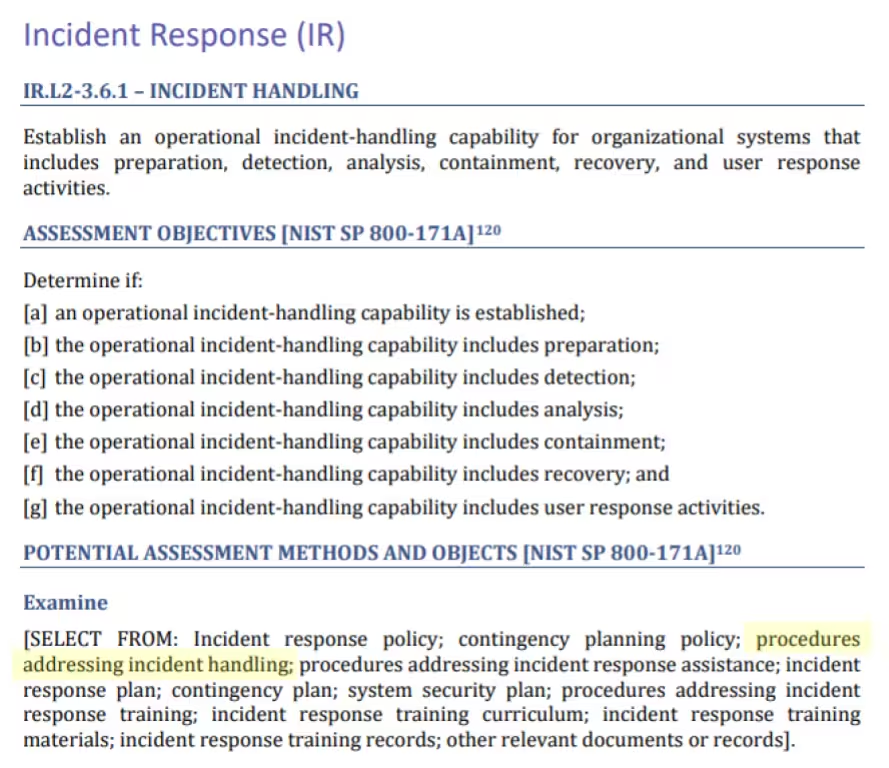
NIST identified a named set of procedures for each practice within NIST SP 800-171. The assessment guide (SP 800-171A) contains the original mappings. The CMMC assessment guides include this mapping as well. The potential assessment methods and objects section contains a subsection called examine. Within each practice, NIST identified relevant policies, procedures and other artifacts. We used the relevant procedures to organize the section headings within each policy.
The organization maintains a contact list of everyone needed during a crisis. This includes security leads, legal counsel, and law enforcement. Security leads act as the primary point of contact and must be available every hour of every day. All employees and contractors must report any security weaknesses they notice immediately. To stay organized, the team uses a secure database to track every incident with a unique ID. This database stores logs and notes for at least five years to meet legal requirements.
The organization uses automated tools to watch for red flags 24/7. The incident response process starts the moment someone detects unusual activity. This includes incidents involving malware, a compromised account, missing laptop and data spillage. Security leads investigate every report to ensure the network stays safe.
The organization requires all outside partners and vendors to report security issues immediately. These partners receive contact information so they can alert us when they find a problem. This safety net includes both internal teams and external experts working together.
CMMC Objectives Covered in This Section:
(1) objective from AC.L2-3.1.22
(3) objectives from IR.L2-3.6.1
(5) objectives from IR.L2-3.6.2
(1) objective from SI.L2-3.14.2
Incident Response
The organization maintains an Incident Response Plan (IRP) for handling security crises. The CISO reviews and approves this plan every year. To keep the strategy safe from hackers, the team stores copies in a restricted digital vault. Once a team member confirms a real incident, they follow the response procedures. They record every detail in a central database and take action to contain and remove the threat.
A specialized team manages these response efforts. This group includes IT staff, executives, and department leaders affected by the breach. If needed, the organization brings in forensic experts and legal consultants to help. Incident response handlers sign and time stamp actions taken during the response. When collecting evidence, the team follows strict "chain of custody" rules. Staff work in pairs so one person can record events while the other performs technical fixes.
If sensitive data "spills", the team must act to move the information to a safe place. The team must sanitize the affected hardware. The organization maintains a Disaster Recovery Plan (DRP) to get systems back online. Leaders specify Recovery Time Objectives (RTOs) to define downtime tolerances. The DRP also specifies Recovery Point Objectives (RPOs) to define data backup frequencies. The team works with public relations experts to manage the company's reputation. The team tracks how fast they detect and stop threats to improve their defenses.
CMMC Objectives Covered in This Section:
(1) objective from AC.L2-3.1.5
(4) objectives from IR.L2-3.6.1
(5) objectives from IR.L2-3.6.2
Incident Reporting
The organization must follow specific government rules for reporting cyber attacks. Staff report incidents affecting the confidentiality of CUI to the Department of Defense. This report must go through the DIBNet portal within 72 hours of finding the problem. The organization maintains an External Certificate Authority (ECA) certificate at all times.
CMMC Objectives Covered in This Section:
(1) objective from IR.L2-3.6.2
Incident Response Testing
The organization tests its disaster recovery plan every six months. During these tests, staff restore data and verify the system returns to normal. The team performs incident response drills every twelve months. These drills include a tabletop exercise where leaders practice making strategic decisions. Once a year, the team analyzes historical incident data, trends, and new threats. They use these findings to identify weaknesses in their current plans and training. The organization updates procedures based on these lessons. This cycle of testing and analysis ensures the company’s defenses grow more capable.
CMMC Objectives Covered in This Section:
(1) objective from IR.L2-3.6.3
Contingency Operations
The team reviews and updates the DRP every year or after major system changes. This plan identifies essential business functions for the team to focus on first. All backups sit in a separate location away from the main systems. This separation prevents an attack on the live network from spreading to the saved files. Security remains a priority even for stored data. The organization encrypts all backups using FIPS-validated cryptographic modules. If encryption is not possible, the team must use physical locks and security to protect the data.
CMMC Objectives Covered in This Section:
(1) objective from AT.L2-3.2.1
(1) objective from CM.L2-3.4.7
(1) objective from IR.L2-3.6.1
(1) objective from MP.L2-3.8.9
Syncing Policies with System Security Plan
FedRAMP guidance on how to write a control implementation statement states the following:
Implementation statements should reference supporting policies and procedures.
If a document is long, point to the exact sections that matter instead of the whole thing.
Write summaries so that reviewers don't have to go look up other documents.
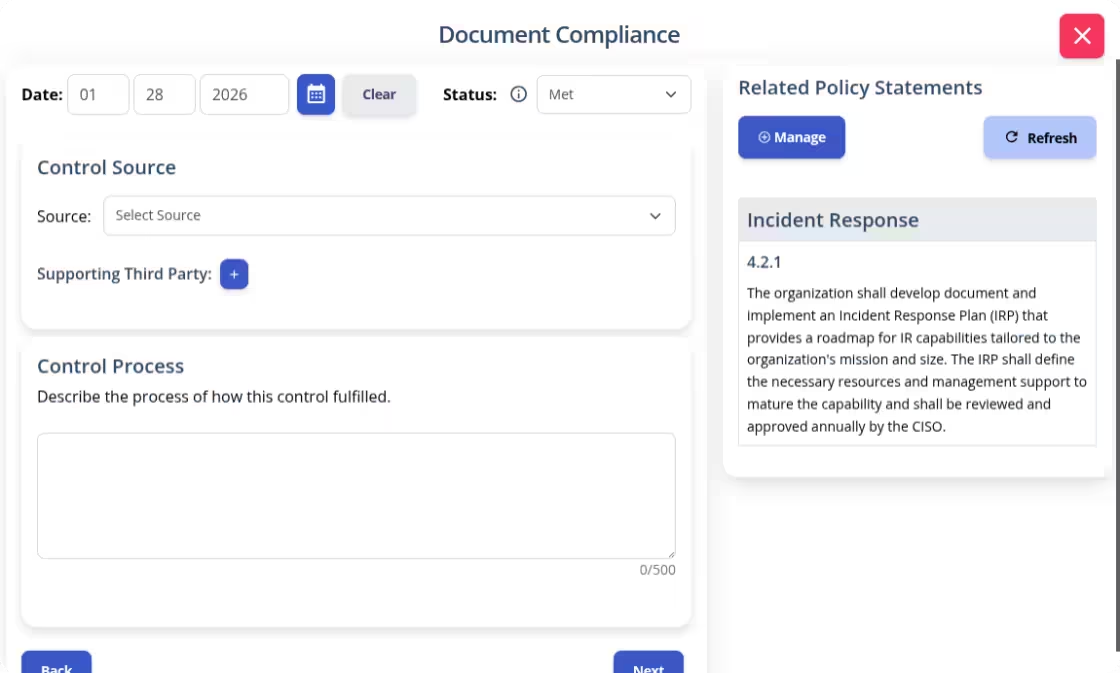
Write your policies before you start drafting your security plan. K2 GRC shows you exactly how each part of your policy connects to your security goals.
The input screen shows the specific policy rule and its ID number. This identifies relevant policy statements when writing your system security plan implementation statements. The system then adds your work to the final security plan template.
Conclusion
When a security incident hits, the clock is your biggest enemy. Every second of hesitation can mean more data lost and more damage to your reputation. It is a terrifying feeling to watch a "red flag" pop up and realize your team doesn't know who to call or what to do next. But you don't have to stay in that place of fear. By building a solid Incident Response plan, you take the power back. Confidence comes from knowing your backups are safe and your leaders are ready. This isn't about compliance, it's about protecting your business. Stop worrying about the "what-ifs" and start preparing for the "when." Download our Incident Response Policy template to get a professional, ready-to-use road map. Equip your team with the tools they need to stay calm, act fast, and stand strong, no matter what comes your way.
❓ Frequently Asked Questions About Incident Response Policy
What is an incident response policy?
An incident response policy is a formal document that explains how an organization prepares for, detects, responds to, and recovers from security incidents. It gives teams a clear plan to follow so they can act quickly and reduce confusion during a crisis.
Why is an incident response policy important?
An incident response policy helps organizations limit damage, protect sensitive data, and restore operations faster after a security event. It also helps teams stay organized by defining responsibilities, reporting steps, and recovery expectations before an incident happens.
What should be included in an incident response policy?
A strong incident response policy should include the policy’s purpose, scope, owner, review schedule, response procedures, roles and responsibilities, and related documents. It should also cover key response stages like detection, containment, recovery, testing, and incident reporting.
How often should incident response plans be tested?
Incident response plans should be tested on a regular schedule so teams can practice how they would react during a real event. In this blog’s guidance, disaster recovery testing happens every six months, while incident response drills and tabletop exercises happen every twelve months.
Who is responsible for carrying out an incident response policy?
Responsibility usually falls on a dedicated incident response team that may include IT staff, security leads, executives, and affected department leaders. Outside experts like legal counsel and forensic specialists may also support the response when needed.
Does an incident response policy help with CMMC or NIST compliance?
Yes, an incident response policy supports compliance by documenting how your organization handles incidents in a structured and repeatable way. The blog ties this policy to CMMC and NIST-aligned practices, including incident handling, reporting, testing, and contingency operations.
Learn how to build an AI risk management policy that addresses governance, risk appetite, AI security risks, regulatory requirements, and ongoing monitoring.
A risk register helps organizations identify, assess, and manage potential risks in one centralized place. Learn the key components of a risk register, how to create and maintain one, and how it supports a more proactive approach to risk management.
New K2 Assist AI, AI-powered Readiness Review, MCP integration and Skills bring AI-driven execution and assessment capabilities to governance, risk, compliance and training workflows.