HIPAA Administrative Safeguards: Key Changes and New Requirements

Oct 23, 2026
Learn how the proposed HIPAA Security Rule update changes administrative safeguards, and use a 2013-to-2027 crosswalk to find your compliance gaps.
Read More
10 min read

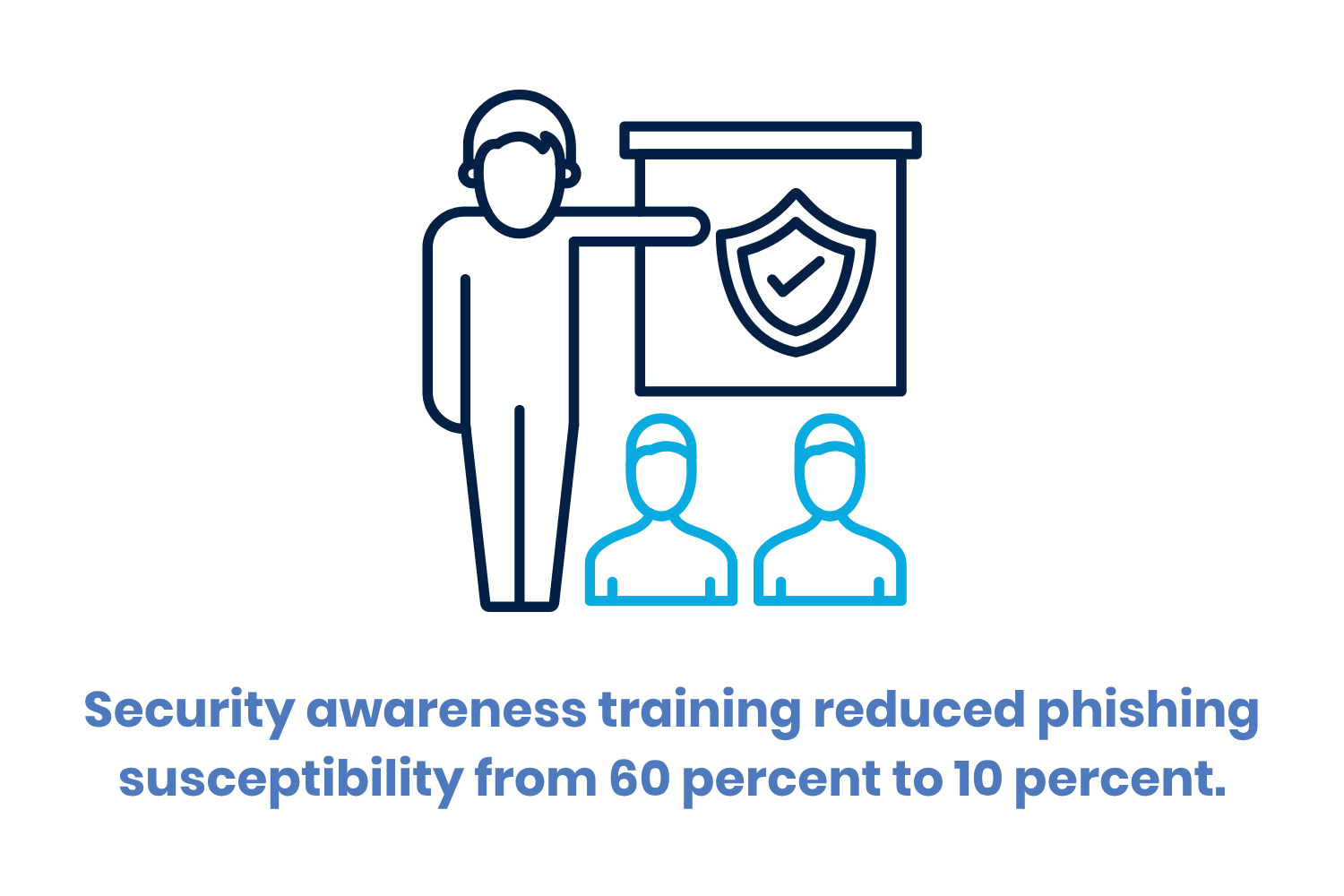
In a recent study, organizations that maintained consistent security awareness training saw employee phishing susceptibility drop from 60 percent to 10 percent within 12 months.
That improvement reinforces a critical reality in modern cybersecurity programs. Most security incidents are not caused by sophisticated attacks alone, but by gaps in human behavior, inconsistent training, and unclear handling procedures.
This is why the DOD CUI program places strong emphasis on mandatory training across all environments that handle federal information. Under Executive Order 13556, Controlled Unclassified Information (CUI) requires safeguarding or dissemination controls, and these requirements apply across all agencies and contractors involved in government contracting activities for contracts that include sensitive federal data.
The DOD CUI program mandatory training framework ensures that all DOD personnel have access to complete structured training for all DOD personnel, typically through a learning management system, and in alignment with 32 CFR Part 2002, which establishes federal policy for CUI handling.
This includes strict expectations for CUI training requirements for industry, especially in environments where contracts with CUI requirements exist and where personnel must understand CUI along with the procedures required to properly manage federal data.
In practice, organizations must ensure personnel are not only trained but able to apply knowledge in real workflows involving activities for contracts with CUI, including handling, reporting, and safeguarding sensitive data.
K2 GRC helps organizations operationalize these requirements by embedding compliance directly into workflows, ensuring training translates into real-world execution rather than checkbox completion.
Controlled Unclassified Information (CUI) is federal information that is not classified but still requires protection due to legal, regulatory, or government policy requirements. It is considered sensitive but unclassified, meaning it still carries risk if mishandled.
The DOD CUI program requires mandatory training for all DOD personnel and contractors because inconsistent handling of sensitive data remains one of the most common sources of security incidents.
Anyone classified as DOD contractors or DOD personnel with access must understand how to properly handle CUI must requirements under federal regulation. This includes understanding classification, marking, dissemination, and reporting expectations.
Training is not optional. It is a required part of onboarding and continuous compliance under federal guideline implementation secure websites NIST regulation ensure 32 CFR Part 2002 exam print a certificate certification 13556 requires safeguarding or dissemination controls requirements apply frameworks.
K2GRC enhances this process by ensuring training is integrated into role-based access systems so that compliance is continuously enforced rather than periodically verified.
Controlled Unclassified Information represents federal data that requires protection even though it is not classified under national security rules.
For contractors, contracts with CUI requirements create binding obligations that are enforced through required government contracting activities. Once CUI is introduced into a contract, all associated systems, personnel, and workflows must comply with federal handling standards.
This applies directly to government contracting activities for contracts that involve federal systems or data sharing requirements.
Organizations must ensure compliance by establishing structured processes for handling sensitive data, including proper classification, access control, and reporting.
Failure to comply with these expectations can result in contract penalties, loss of eligibility, or security findings during audits.
CUI training requirements for industry apply to any individual who accesses, processes, or stores federal information.
The course provides information on identifying Controlled Unclassified Information, applying proper handling procedures, and maintaining compliance with federal expectations.
Most organizations deliver this training through a learning management system, where employees complete modules and assessments such as an exam or quiz exam. Upon completion, users may be required to print a certificate as proof of training and certification.
Training is designed to ensure personnel can properly participate in activities for contracts with CUI and understand how to follow procedures for identifying and reporting security incidents when issues arise.
K2 GRC connects these training results to compliance workflows so organizations can demonstrate readiness during audits and ensure ongoing alignment with policy requirements.
Proper identification and handling of CUI is a foundational requirement for all personnel working in federal environments.
Employees must understand CUI along with the procedures used to classify, mark, and handle sensitive data. This includes recognizing when to appropriately share sensitive information and when restrictions apply.
In real-world workflows, employees must be able to identify CUI in documents, emails, systems, and contract deliverables. Once identified, it must be handled according to federal guidelines.
A key part of this process is identifying and reporting security incidents, including applying correct procedures for identifying and reporting security incidents when data may be exposed or mishandled.
These practices are essential across all activities for contracts with CUI, where proper handling ensures compliance and reduces organizational risk.
Proper marking ensures that Controlled Unclassified Information is clearly identified and handled appropriately throughout its lifecycle.
Safeguarding includes technical and administrative controls such as encryption, access restrictions, and secure storage. These measures ensure organizations maintain effective protection of sensitive federal information.
Organizations are also required to follow approved procedures for destroying CUI along authorized methods once retention requirements are met.
These safeguards align with federal NIST regulation, official use FOUO handling practices, and agency-level implementation requirements that define how sensitive data must be managed.
Incident response is a required component of all CUI programs.
Personnel must be trained to recognize when Controlled Unclassified Information may have been exposed, lost, or accessed without authorization. Once identified, incidents must follow structured procedures for identifying and reporting security incidents.
These reporting requirements apply across all activities for contracts with CUI, ensuring timely escalation and containment of potential risks.
K2 GRC streamlines this process by centralizing incident reporting and ensuring organizations can track, manage, and resolve issues efficiently while maintaining compliance visibility.
Any government contracting activities for contracts involving Controlled Unclassified Information require immediate reporting if unauthorized access, exposure, or loss occurs.
These requirements ensure rapid response and minimize the potential impact of data exposure.
The DOD CUI program operates under government-wide policy established in coordination with agency NARA, which maintains official CUI registries.
These registries define categories of Controlled Unclassified Information and provide standardized handling and dissemination requirements across federal agencies and contractors.
This ensures consistency in how sensitive data is classified and protected across all environments.
The CUI registries serve as the authoritative source for defining Controlled Unclassified Information categories and associated handling requirements.
They ensure that agencies and contractors apply consistent rules for classification, marking, and protection of sensitive data.
Because Controlled Unclassified Information varies by category, training must reflect different handling requirements based on data type and contract scope.
This ensures personnel understand how to properly handle CUI must expectations in different operational contexts.
Official guidance is provided through secure websites, federal regulation, NIST frameworks, and 32 CFR Part 2002.
These sources define how organizations must comply with federal expectations and ensure proper implementation of CUI requirements.
Contractors must demonstrate ongoing compliance through training records, system controls, and documented procedures.
Auditors typically review mandatory training for all DOD, learning management system records, and evidence of completed certification such as print a certificate exam certification documentation.
Common issues include inconsistent handling practices, incomplete training documentation, and failure to properly secure or manage sensitive information.
Fixing these gaps requires stronger enforcement, improved workflows, and continuous reinforcement of security practices.
CUI training is foundational to CMMC compliance because it ensures personnel understand how to properly protect federal data and maintain secure systems.
Auditors typically request proof of mandatory training for all DOD, including LMS records, certificates, and assessment results such as quiz or exam completion.
Strong programs reinforce security awareness, ensure consistent handling of official use FOUO, and continuously improve how personnel manage sensitive information across workflows.
Organizations rely on learning management system platforms and compliance tools to track training and enforce policies.
K2GRC enhances this by integrating training, policy enforcement, and operational controls into a unified system that ensures consistent handling of Controlled Unclassified Information across all environments.
The DOD CUI program establishes a structured framework to ensure Controlled Unclassified Information is properly protected across all federal and contractor environments.
By meeting CUI training requirements for industry, following 32 CFR Part 2002, and applying consistent procedures for handling, reporting, and safeguarding data, organizations strengthen both compliance and operational security.
K2 GRC helps organizations move beyond checkbox compliance by embedding CUI requirements directly into workflows, ensuring continuous alignment between training, policy, and real-world execution.