📊 GRC Foundations: System Security Plans and Remediating Infrastructure Vulnerabilities
Global economic modeling indicates that the financial devastation associated with cyberattacks is escalating rapidly, with costs projected to skyrocket from $9.22 trillion in 2024 to $13.82 trillion by 2028. To guard infrastructure against severe structural breaches, regulatory frameworks are enforcing strict documentation mandates. Creating a comprehensive System Security Plan (SSP) is the foundational requirement for establishing a defensive perimeter under federal security guidelines.
The Three Pillars of Comprehensive Security Architecture
✅ Strategic Authorization Alignment: The SSP acts as a master blueprint used by federal auditors to verify security configurations. Under frameworks like CMMC Level 2 and NIST SP 800-171 Rev. 3, organizations must document all technical and administrative controls. For FedRAMP authorization, the document integrates strict FIPS 199 categorization baselines to map information environments in real time.
✅ Contextual Appendix Structural Manifests: Mature documentation isolates deep operational records from core system narratives using modular appendices. This repository isolates critical data points—such as network boundary maps, data flow paths, master asset inventories (servers, devices, applications), and assigned security team role profiles—to speed up the audit cycle.
✅ Continuous Plan of Action and Milestones (POA&M) Tracking: Recognizing that full system compliance is rarely achieved instantly, security gaps are routed to a living POA&M tracking file. This document logs explicit technical failures, targets completion timelines, tracks remediation milestones, and establishes internal accountability without risking financial penalties.
That's not an arbitrary number. It represents cyberattacks crippling hundreds of thousands of companies across the world. This means compromised data, damage to public reputation, and possible fines.
With these threats looming on the horizon, business leaders are taking action. Keeping your assets and processes safe has never been more crucial. Compliance frameworks are tightening across all industries.
Creating a System Security Plan (SSP) is the foundation of any cybersecurity program. It documents what you're protecting, how you're protecting it, and who's responsible. This gives your team a clear picture of your security measures. Pursuing compliance with government frameworks, like NIST SP 800-53, an SSP isn't optional. It's step one.
We'll break down what an SSP covers, why having one benefits your organization, and how to build one. Including a ready-to-use template to get you started!
What Is a System Security Plan (SSP)?
The National Institute of Standards and Technology states SSPs are a critical document. One that outlines security requirements for an information system. It describes the security controls in place or planned for meeting those requirements.
The plan serves as a blueprint for documenting security practices. Federal agencies and contractors use this document to help define responsibilities. It also helps prove compliance with different frameworks.
They describe the organization's information system while identifying system boundaries. SSPs also detail the controls in place to protect sensitive assets. It explains how to manage security risks over time with continuous monitoring. All while preserving the confidentiality of critical business and government information.
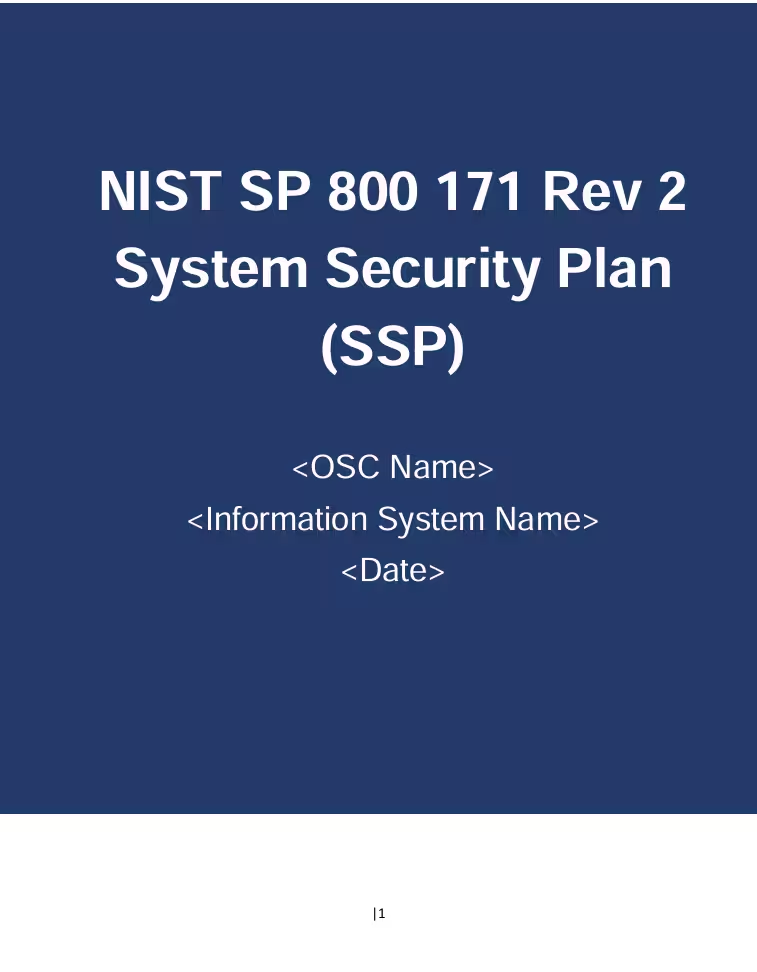
Example Cover Page of K2 GRC's Platform Generated SSP
Who Needs an SSP?
Any organization handling sensitive information needs an SSP. Especially those who work with the U.S. Government. This includes those that work in the Defense Industrial Base (DIB). These contractors often handle Controlled Unclassified Information (CUI) or Federal Contract Information (FCI).
Here are a few frameworks in which having an SSP is critical:
Defense Federal Acquisition Regulation Supplement (DFARS).
Federal information systems working with government data must maintain an SSP under FISMA. But even outside of federal mandates, any business can benefit from having one in place. Those who work in healthcare use documented security controls to protect PHI.
How SSPs Support CMMC and FedRAMP Authorization
Many frameworks use SSPs as a document that outlines an organization's security posture. This is especially true for CMMC and FedRAMP.
Let's take CMMC Level 2 for example. The SSP here demonstrates how an organization implements and maintains the security requirements. As well as the organizational controls required by NIST SP 800-171. Assessors use the document to understand the environment and review control implementations. As well as identify any gaps that may impact certification.
Now for FedRAMP. The plan serves as a foundational assessment document throughout the authorization process. Federal assessors rely on it to test the following:
While the specific requirements vary between frameworks, the goal remains the same. To provide a defensible record of how your organization protects sensitive information.
Why SSPs Are Important for Compliance
Many cybersecurity frameworks need organizations to document their information security strategy. An SSP provides evidence that your company implements security controls across your environment.
Take NIST 800-171, a special publication, which requires you to document all 110 controls in the SSP. If your organization works with the Department of Defense (DoD), you must have an SSP.
Maintaining an accurate and up-to-date SSP helps organizations:
Identify vulnerabilities in operations.
Reduce the risk of breaches.
Reduce audit preparation efforts.
Establish accountability across security programs.
An SSP also ensures consistent implementation of controls. They help prevent unauthorized access to systems and data. They support swift recovery from security incidents. Having one prove to agencies, stakeholders, and customers that you take security seriously.
Failing to maintain an accurate SSP damages your market competitiveness. It can also lead to severe consequences. Some companies have faced settlements up to $4 million for non-compliance with regulations.
A Real System Security Plan Example
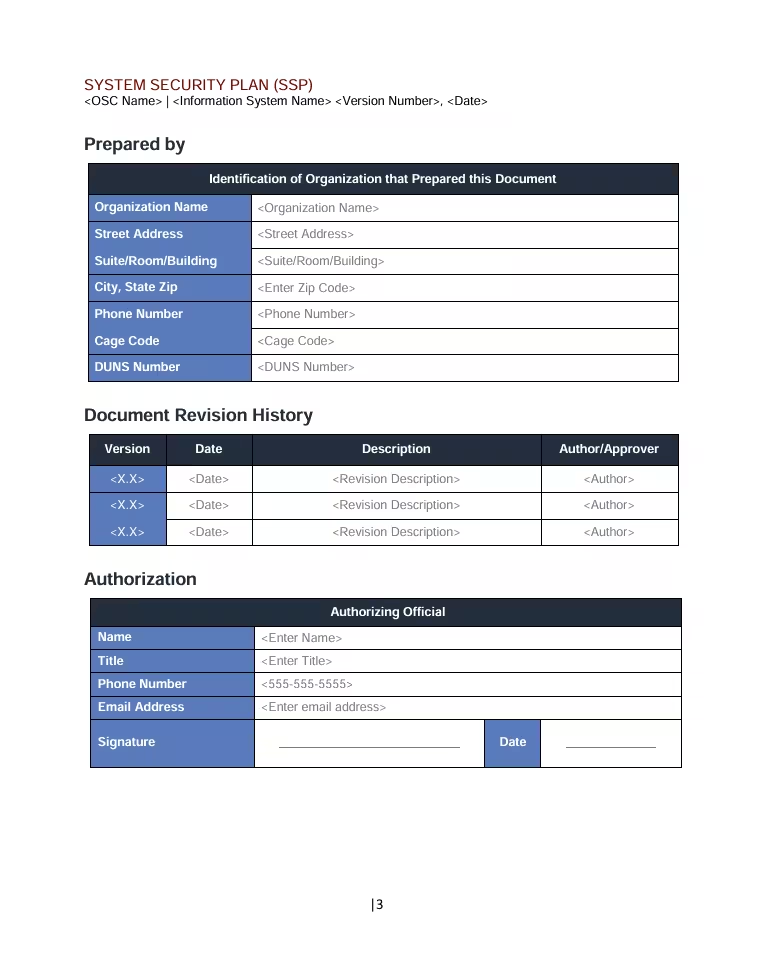
To help you understand what a mature SSP looks like, we created a template. This downloadable template aligns with modern security requirements and industry best practices. Rather than providing a simple checklist, our SSP includes an extensive outline. Covering everything from security architecture and access controls to incident response plans.
The result is a centralized resource that helps organizations document their cybersecurity posture. All while preparing for assessments and audits. A good SSP template should include, but is not limited to:
Security control mappings
Implementation statements.
Responsible personnel.
Evidence references.
Risk tracking fields.
Appendix structures.
Rather than starting from a blank document, organizations can use a template.
Beyond documenting security controls, a strong SSP includes appendices. These provide supporting information for assessors and stakeholders. Appendices help keep the main document focused while providing extra context when needed.
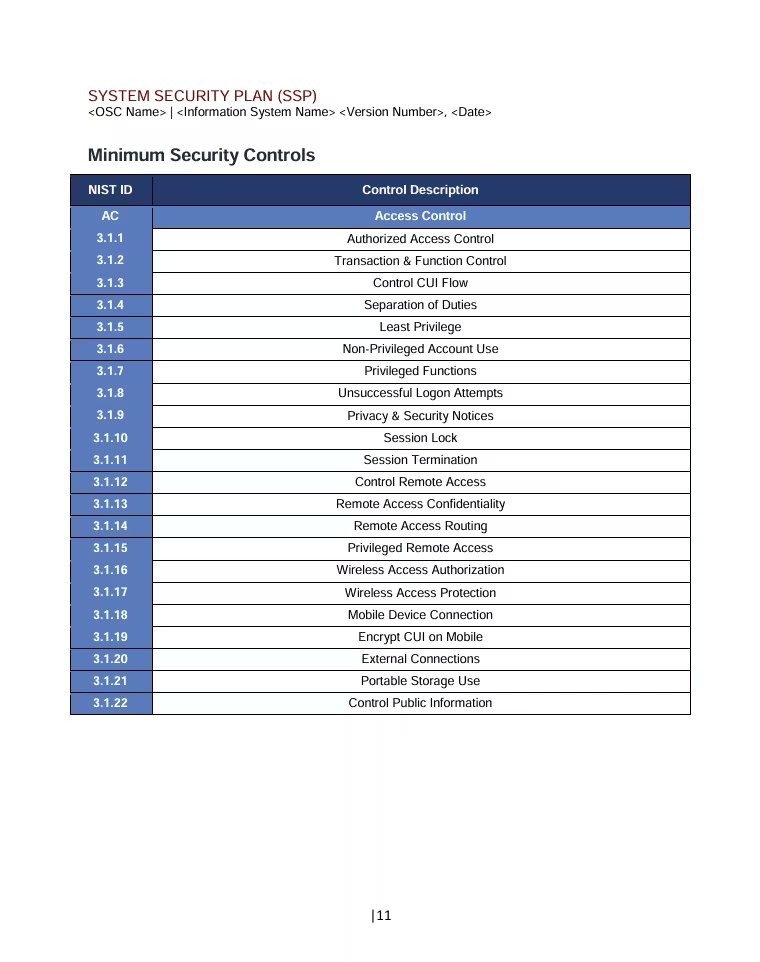
via K2 GRC's generated SSP
For example, K2's SSP template includes appendices for the following:
System inventories (servers, workstations, applications, etc).
User roles and responsibilities.
Security policies and procedures.
Network diagrams that illustrate system boundaries and data flows.
Organized SSP appendices are perfect for making audits run smoother. This improves documentation quality and maintains a clear, comprehensive security record. Keeping security teams on the same page when updating their information security program.
The Role of a Plan of Action and Milestones (POA&M)
A Plan of Action and Milestones (POA&M) is a document that identifies security weaknesses in a system. It describes the specific steps, resources, and timeline for remediating them. This document works alongside your SSP. They help document security gaps and remediate activities. They also alert responsible stakeholders and target completion dates.
Even the most prepared organizations rarely achieve full compliance during their initial assessment. That's where a POA&M is so important.
Each entry identifies a control deficiency. It then outlines the corrective actions required and establishes milestones for remediation. It also tracks progress toward completion. This demonstrates that an organization identifies its weaknesses and works to address them.
Note that having open POA&M items is not an issue. Security improvements take time. What matters is maintaining an accurate, realistic remediation plan and demonstrating continuous progress. Having well-documented POA&M can help bolster your SSP. When maintained, they become a valuable tool for improving security maturity.
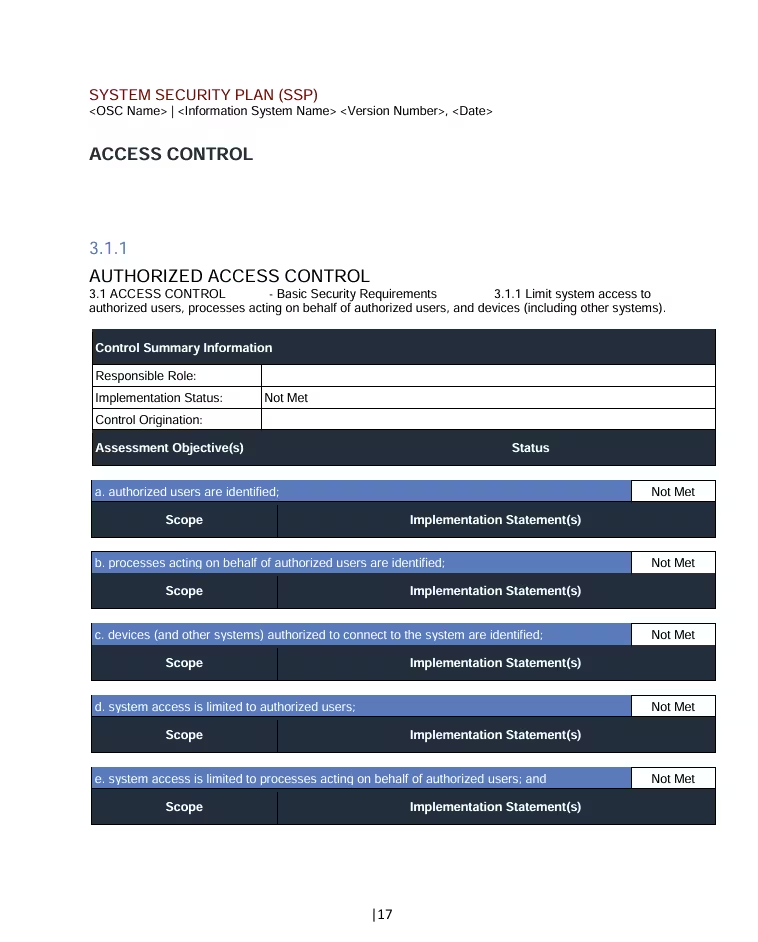
Example Control Breakdown Section of K2 GRCs Generated SSP
Common Challenges When Creating an SSP
There are a few common challenges when creating SSPs for federal information systems. Or for any system. Many organizations underestimate the effort involved. A single SSP exists in one document, but requires coordination across many departments. Such as security, IT, operations, and executive teams. Here are some of the most common challenges that come with creating an SSP:
Gathering Documentation. Security information is not usually stored in one place. Organizations need to collect information from many different departments. As well as all their systems and spreadsheets before they can begin building. This alone can be pretty time-consuming and extensive.
Maintaining Accuracy. An SSP can become outdated. If systems, personnel, technologies, or processes change, your plan will, too. Keeping the document current requires ongoing reviews. Updates rather than a one-time effort.
Mapping Controls. Organizations must connect policies, procedures, and technical safeguards to specific security requirements. This mapping process can be complex. Especially when many frameworks get involved.
Preparing for Assessments. Auditors and assessors expect evidence that supports every documented control. Missing evidence and inconsistent documentation can create delays and increase risk.
Without a centralized process, maintaining an SSP becomes a significant administrative burden. Many organizations turn to governance platforms, like K2 GRC, to improve consistency.
How Automation Simplifies SSP Management
Maintaining SSPs has become more difficult as programs evolve. Security teams often find themselves feeling scattered. Updating spreadsheets, chasing documentation, tracking remediation efforts, and preparing evidence. This can all be a huge administrative drain. Over time, this fragmented approach becomes inefficient, error-prone, and difficult to scale.
This is where automation provides an advantage. Modern governance, risk, and compliance (GRC) platforms help organizations centralize these tasks. From creating security documentation to producing audit-ready reports from a single location.
You don't need to manually update documents and spreadsheets any longer. Platforms like K2 GRC allow your team to keep up and scale with changing technology. We allow you to maintain an SSP that reflects your current security posture in real time.
❓ System Security Plans & GRC Automation FAQ
What core parameters define a standardized federal System Security Plan (SSP)?
According to National Institute of Standards and Technology criteria, an SSP is a master document that maps out an information system's operational parameters. It explicitly details the system's authorization boundaries, defines internal roles and security responsibilities, and provides comprehensive **implementation statements** explaining how current or planned technical safeguards satisfy security controls.
Why is an active Plan of Action and Milestones (POA&M) file required alongside an SSP?
Achieving total compliance on day one is highly uncommon due to system complexities. A **POA&M file** functions as a transparent cross-reference tracking tool that flags identified technical weaknesses or documentation gaps. Rather than hiding non-compliance, it documents the required corrective actions, identifies responsible staff members, assigns clear resource budgets, and maps out target resolution milestones.
What are the primary operational challenges involved in manually drafting a compliant SSP?
Compiling an enterprise-grade SSP is heavily delayed by four main operational administrative burdens:
Information Silos: Tracking down scattered system details across multiple IT, HR, and facility teams.
Maintaining Accuracy: Keeping the document updated in real time as infrastructure, software, and personnel shift.
Complex Control Crosswalks: Manually mapping active policies and network configurations to different overlapping regulatory requirements.
Audit Readiness Gaps: Organizing and validating a deep repository of verification screenshots and log files to support every implementation statement.
How do modern Governance, Risk, and Compliance (GRC) automation tools simplify document lifecycles?
Static spreadsheets and manual documents create fragmented, error-prone compliance data. Advanced platforms—such as K2 GRC—centralize asset profiles, automatically map configuration settings to corresponding controls, and log modifications in real time. This automated oversight removes administrative drag, creating an accurate, **audit-ready system architecture blueprint** that easily scales with shifting federal rules.
Risk management in healthcare helps organizations identify, assess, and reduce risks that can impact patient safety, compliance, operations, and finances. Learn practical strategies for building a proactive risk management program and prioritizing the risks that matter most.
The EU AI Act is reshaping how businesses build and use AI. Learn what the law requires, who it applies to, and how to prepare your organization for compliance.